JD Vance Condemns WNBA Anthem Absences—What the Rules Say
JD Vance called WNBA Finals anthem absences disgraceful, but the written rule, a suspended protocol and the teams’ longstanding routines complicate the story.
By Vance Force Editorial Desk
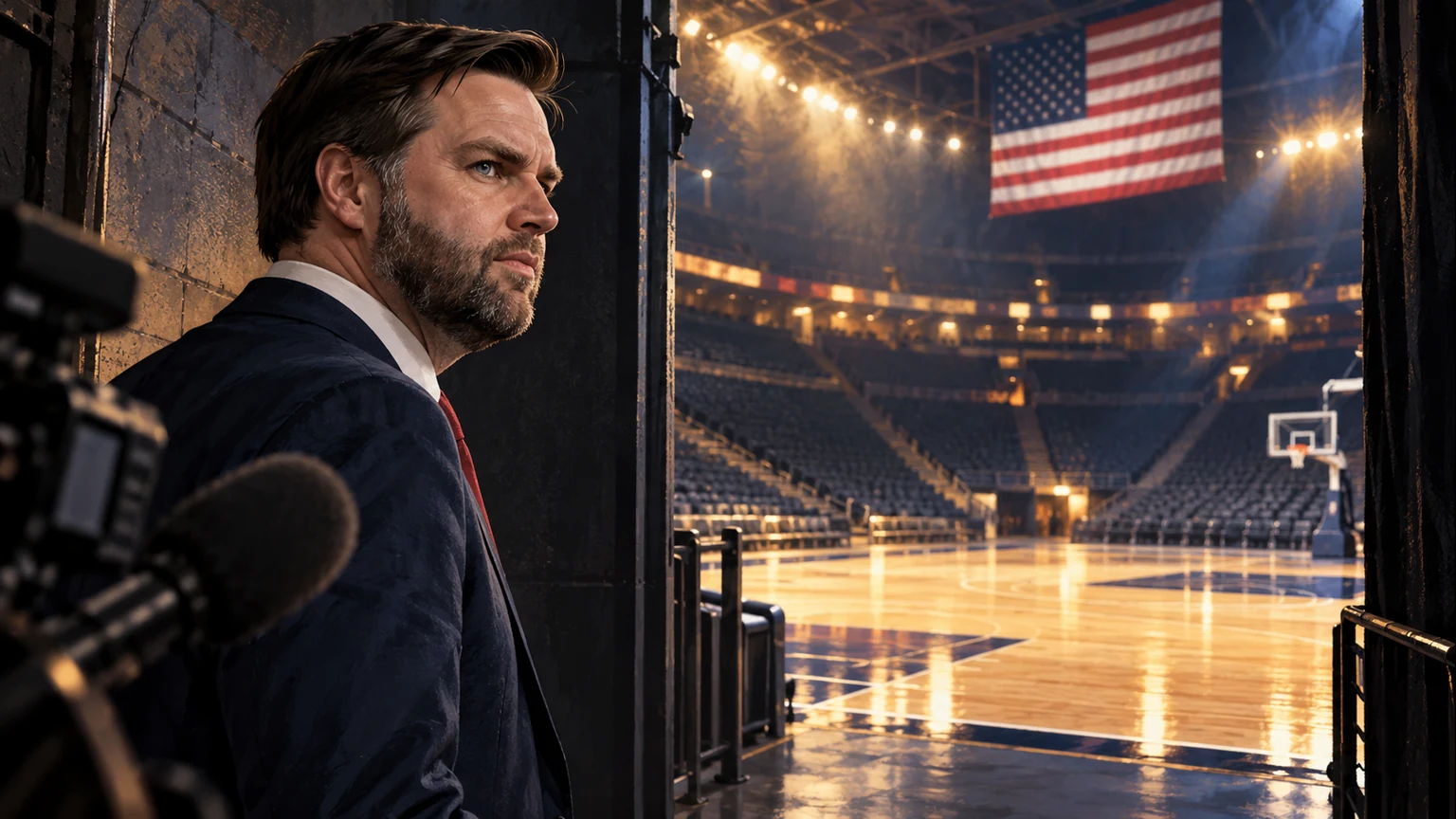
AI-assisted editorial illustration of JD Vance beside an empty basketball court and U.S. flag, representing the JD Vance WNBA anthem comments debate.
DISCUSSION OPENRead the source brief, then add your evidence and argument.
Vice President JD Vance entered a fast-moving WNBA controversy Wednesday night, calling the absence of Atlanta Dream and Golden State Valkyries players during the national anthem before the first two Finals games “disgraceful.” His criticism turned an arena routine into a national argument about patriotism, protest and the duties that accompany public prominence.
The strongest version of Vance’s case is straightforward: professional athletes receive an unusually visible platform, and he believes civic gratitude should include public respect for the anthem. But the factual record is more complicated than a simple story of players suddenly breaking a clear, actively enforced rule. The league’s printed rulebook still tells players and coaches to stand in a dignified posture, while the Associated Press reports that the WNBA suspended that protocol in 2017. Both teams also say their pregame movements reflect established routines rather than a new Finals protest.
That distinction matters. The **JD Vance WNBA anthem comments** deserve to be evaluated on what he actually argued, while the players’ conduct should be described without assigning motives that have not been established.
What Vance Said on Wednesday
In an October 21 interview with Raymond Arroyo, Vance said he regarded the players’ absence as “disgraceful.” According to the New York Post’s account of the interview, which was produced by Fox News Digital, the vice president argued that disagreement with a politician or public policy should not become disrespect for the country as a whole.
Vance framed the issue around gratitude. He pointed to the safety, prosperity and professional opportunity available to WNBA players in the United States, then said that greater appreciation would make them less likely to offend fellow citizens. He also placed patriotism within his understanding of *ordo amoris*, the Catholic idea of ordered loves and duties. In Vance’s telling, obligations reach beyond family and neighbors to the national community; loving a country does not require believing it is perfect, but it does require trying to improve it rather than treating the nation itself with contempt.
That is a moral and political argument, not merely a reading of a sports regulation. It is consistent with the confrontational style examined in our coverage of Vance’s response to a rally interruption: acknowledge conflict, reject the opponent’s framing and redirect the audience toward a broader claim about citizenship.
What Happened Before Games 1 and 2
The underlying events are not seriously disputed. Atlanta and Golden State players were not on the court during the anthem before Game 1 on October 17 or Game 2 on October 19. Fox News’ OutKick report documented the absences and noted that the league, the NBA and the teams had not answered its questions before publication.
Yet calling those moments “walkouts” can create an impression that the players were standing on the floor and then staged a coordinated departure in response to a current event. The available reporting does not establish that sequence or motive. The Associated Press reported that players left the court before the performance and returned afterward. Golden State said it has followed the same pregame routine since the franchise began play last season; Atlanta said it has left the court before the anthem for several years.
The teams may still reasonably face criticism for choosing a routine that removes them from a civic ceremony. But a longstanding preparation schedule is not the same factual claim as a newly organized political demonstration. As of the AP report on October 20, neither team had announced a collective Finals protest, and the league had not supplied a public explanation.
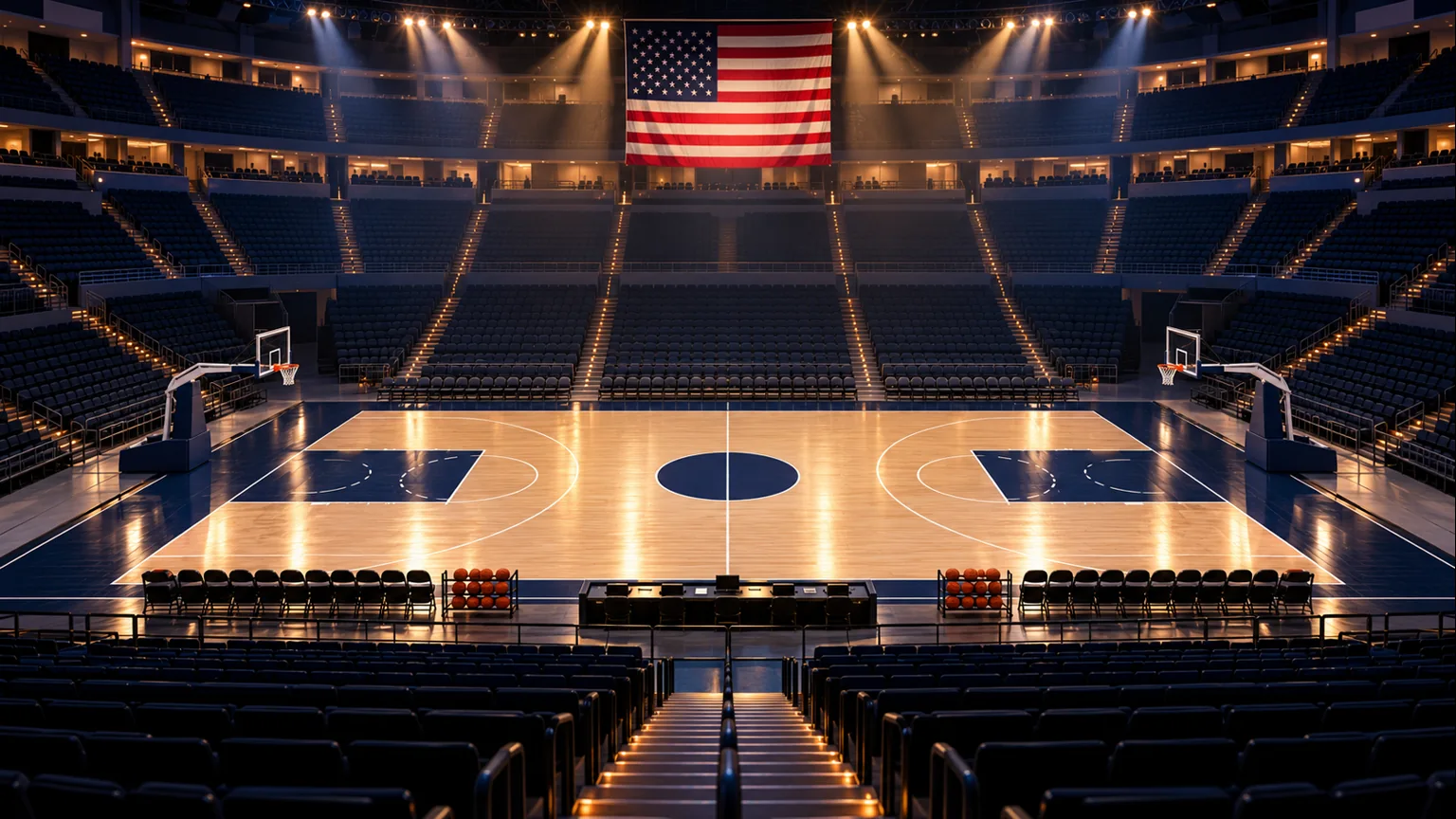
AI-assisted conceptual illustration of an empty arena during an anthem-policy debate; it is not a photograph of either Finals team.AI-assisted editorial illustration.
The Written Rule and the Suspended Protocol
The 2026 official WNBA rulebook contains language requiring players, coaches and trainers to stand and line up in a dignified posture during the national anthem. Read alone, that passage seems decisive. Several reports therefore described the Finals absences as direct violations.
AP supplied the missing institutional history. It reported that the league sent teams a memo in 2017 suspending the anthem protocols. The news organization also found that, since 2020, some teams have remained off the court for the performance, sometimes in connection with social-justice demonstrations and sometimes as part of ordinary preparation. Who now controls the timing—teams, arena operators or the league—was not clear, and the WNBA did not answer AP’s request for clarification.
This produces an avoidable credibility problem for the league. A rulebook should tell players and the public what the enforceable standards are. If a written provision has been suspended for nearly a decade, leaving it unqualified in the current book invites accusations of selective enforcement. If the suspension is no longer operative, the WNBA should say when and why it ended. Silence permits advocates on both sides to fill the gap with assumptions.
It also narrows what can responsibly be claimed today. The players were absent. The rule remains in print. A reported league memo suspended the relevant procedure. Without an updated league statement, it is not established that Atlanta or Golden State committed a punishable rules violation in these Finals.
Where Vance’s Criticism Lands
Vance does not need an enforceable sports rule to make his case. Citizens routinely judge public conduct by standards broader than employment regulations. Supporters can agree with him that appearing for the anthem is an act of basic respect, regardless of what the WNBA can formally punish. They can also see the players’ platform as creating a special obligation to model gratitude.
His emphasis on love of country has another strength: it rejects the idea that criticism and patriotism are opposites. Vance explicitly linked national belonging to improving the country. Properly applied, that principle leaves room for dissent while asking dissenters to recognize the community they seek to change.
The weakness is that his remarks assumed a political meaning that the record has not yet proved. The Fox-produced account characterized the absences as protests, but the teams’ explanations emphasize routine. No report reviewed for this article identified a specific policy the Finals players said they were protesting. Condemning the visible act is fair political commentary; attributing a shared motive requires evidence.
The point resembles the accountability standard discussed in our analysis of Vance’s town-hall candor. Direct language can clarify a leader’s values, but candor is most persuasive when it is paired with a precise account of disputed facts. Here, precision means separating three questions: Were the players present? Were they required to be present under an active protocol? Why were they absent?
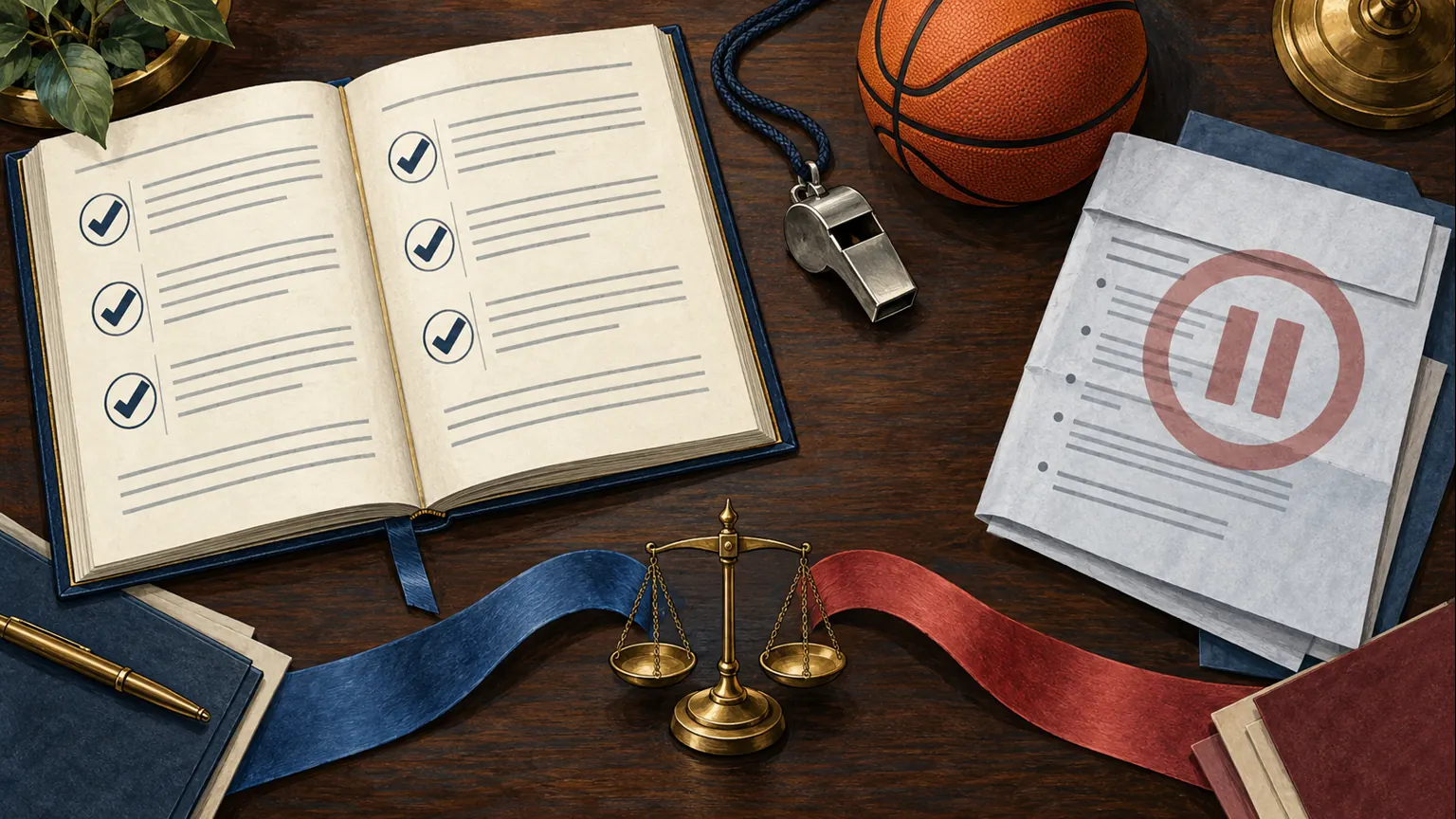
AI-assisted conceptual illustration of the tension between a written sports rule and a suspended enforcement protocol.AI-assisted editorial illustration.
What the WNBA Should Clarify Now
The fastest way to lower the temperature is not for the league to tell Americans how to feel about the anthem. It is for the WNBA to publish a short, verifiable explanation of its policy.
First, the league should say whether the 2017 suspension remains in force. Second, it should explain who schedules pregame court access and whether teams may choose to be in locker rooms during the performance. Third, if the rulebook no longer describes actual practice, the league should amend it before the next season rather than preserving a standard it does not enforce.
The teams also have a role. A routine may be longstanding, but the Finals create a larger audience and a different public meaning. Atlanta and Golden State can state plainly whether their absence was logistical, customary, political or some combination. That would not end disagreement, but it would allow criticism to attach to facts rather than inference.
Vance could sharpen his own argument in the same way. He can maintain that athletes should be present without presenting an unsettled policy question as settled. Doing so would strengthen, not weaken, his position: respect for national symbols is a civic expectation in his view, even where a private sports league has chosen not to enforce it as a workplace rule.
A Debate About Conduct, Not Invented Motives
The restrained conclusion is that Vance identified a genuine cultural divide. Many Americans regard anthem attendance as a modest expression of common membership; others see the timing and form of participation as a matter for teams or individual conscience. Public figures inevitably make choices that audiences interpret.
But the best argument for respect should itself respect the record. The first two Finals games featured empty team sidelines during the anthem. The current rulebook contains a standing requirement. Independent reporting says the protocol was suspended in 2017, and both finalists describe established pregame habits. There is not yet enough evidence to declare a newly coordinated protest or a clearly punishable infraction.
Vance’s moral claim can survive those qualifications. If his goal is to persuade beyond voters who already agree with him, it will be more effective when directed at the confirmed conduct—players not appearing—than at an unverified motive. Meanwhile, the WNBA owes players, fans and critics an unambiguous rule.
*Vance Force is an independent fan community. This editorial is not affiliated with, endorsed by or produced for Vice President JD Vance, the White House, the WNBA, the Atlanta Dream or the Golden State Valkyries.*