New Oversight Letter Puts JD Vance’s Epstein-Files Role Under a Records Test
A new House oversight letter asks JD Vance for records about Situation Room discussions. What is verified, what remains alleged, and what evidence should come next?
By Vance Force Editorial Desk
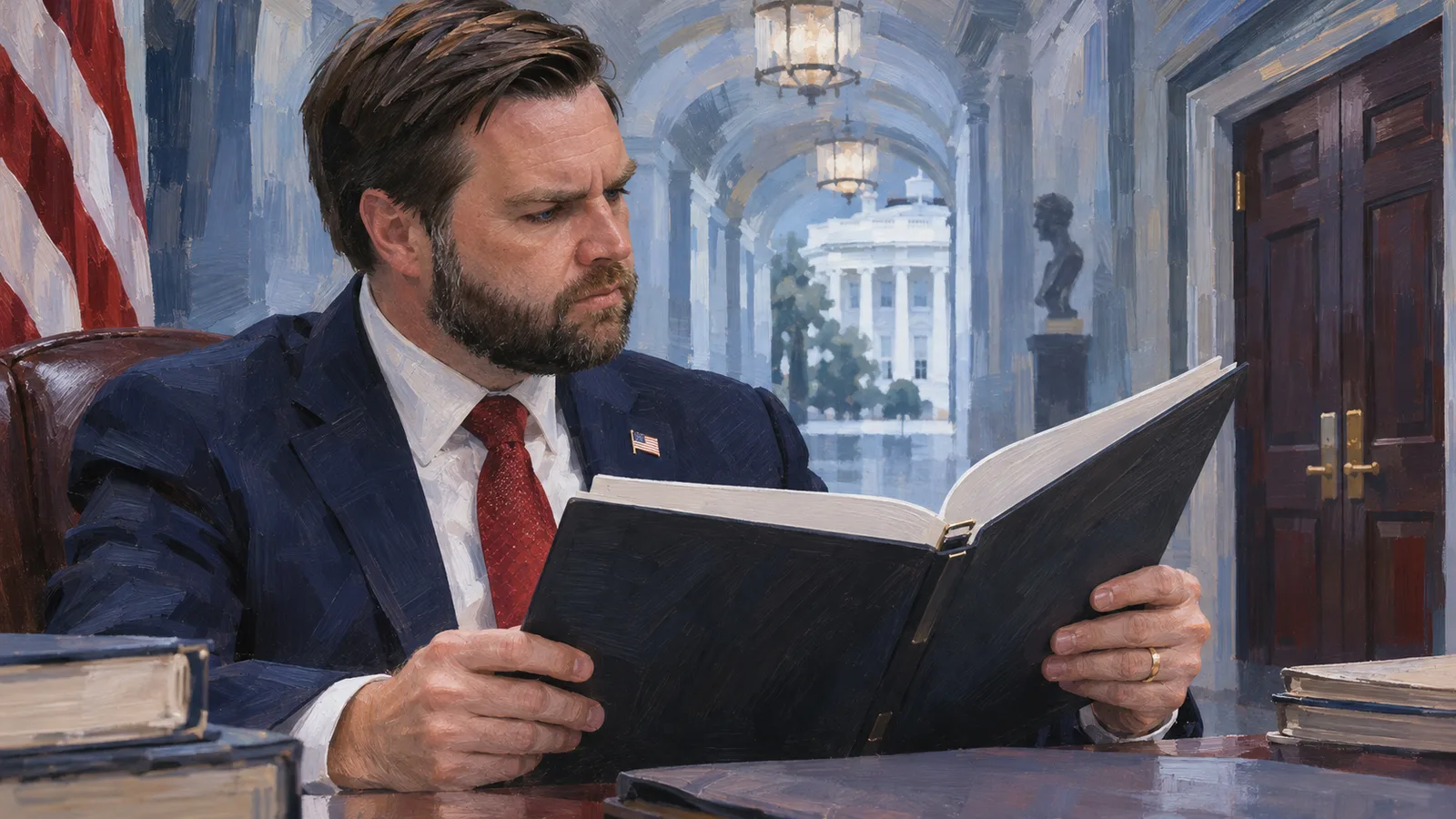
AI-assisted editorial illustration of JD Vance reviewing government records near a closed secure conference-room door, representing JD Vance Epstein files oversight.
DISCUSSION OPENRead the source brief, then add your evidence and argument.
The most important fact in Wednesday’s new congressional move is also the easiest to overstate: a House oversight letter asks Vice President JD Vance for answers and records, but it does not establish wrongdoing. That distinction should define how supporters, critics and neutral observers read the next two weeks.
On November 18, Rep. Robert Garcia of California, the ranking Democrat on the House Committee on Oversight and Government Reform, sent Vance a three-page letter seeking details about White House meetings concerning Jeffrey Epstein records and the administration’s response to congressional demands. The letter sets a December 2 deadline and asks for dates, locations, attendees and officials involved in decisions concerning an interview with Ghislaine Maxwell and her prison transfer. The official letter is a request from the committee’s Democratic side; it is not a subpoena, a committee finding or a court judgment.
That procedural reality matters because the letter uses accusatory language, while several of its core assertions rely on previously published reporting rather than newly disclosed primary evidence. The public question for JD Vance is therefore narrower and more concrete than the political rhetoric: What meetings occurred, what did he advocate, what records exist, and which claims can be corroborated?
What the November 18 letter actually requests
Garcia’s letter asks Vance to identify every administration meeting about Epstein, related files, the response to a committee subpoena or the Epstein Files Transparency Act. It separately seeks meetings and officials connected to interviewing Maxwell in prison or moving her to a minimum-security facility. The requested response date is December 2.
The Associated Press reported that Garcia sent a broader set of letters to administration officials and members of President Donald Trump’s family as Democrats prepare to take control of the House in January. AP described the notices as an early step toward investigations and stressed that preservation notices do not themselves compel recipients to surrender documents. A separate CNN report likewise placed the Vance letter inside a larger Democratic strategy covering administration records, conflicts allegations and agency conduct.
For readers, that context supplies two guardrails. First, the request is part of an incoming majority’s agenda, so partisan incentives are obvious. Second, congressional oversight is still a legitimate constitutional function even when its authors have political motives. Neither observation resolves the underlying factual dispute.
A request for records is not proof of a cover-up
The letter alleges that administration officials met in the Situation Room to manage political fallout and diminish public attention to the files. It cites June reporting by *The New York Times* for those claims. But the letter itself does not attach minutes, emails, transcripts or sworn testimony proving the characterization it adopts.
That is why the most useful next step is documentation. If meeting calendars, participant lists, memoranda or contemporaneous communications exist, they can show whether discussions were primarily about lawful disclosure limits, victim privacy, political messaging, presidential exposure, or some combination of those subjects. Until such records are produced and authenticated, responsible analysis should describe the committee’s language as an allegation and its questions as unresolved.
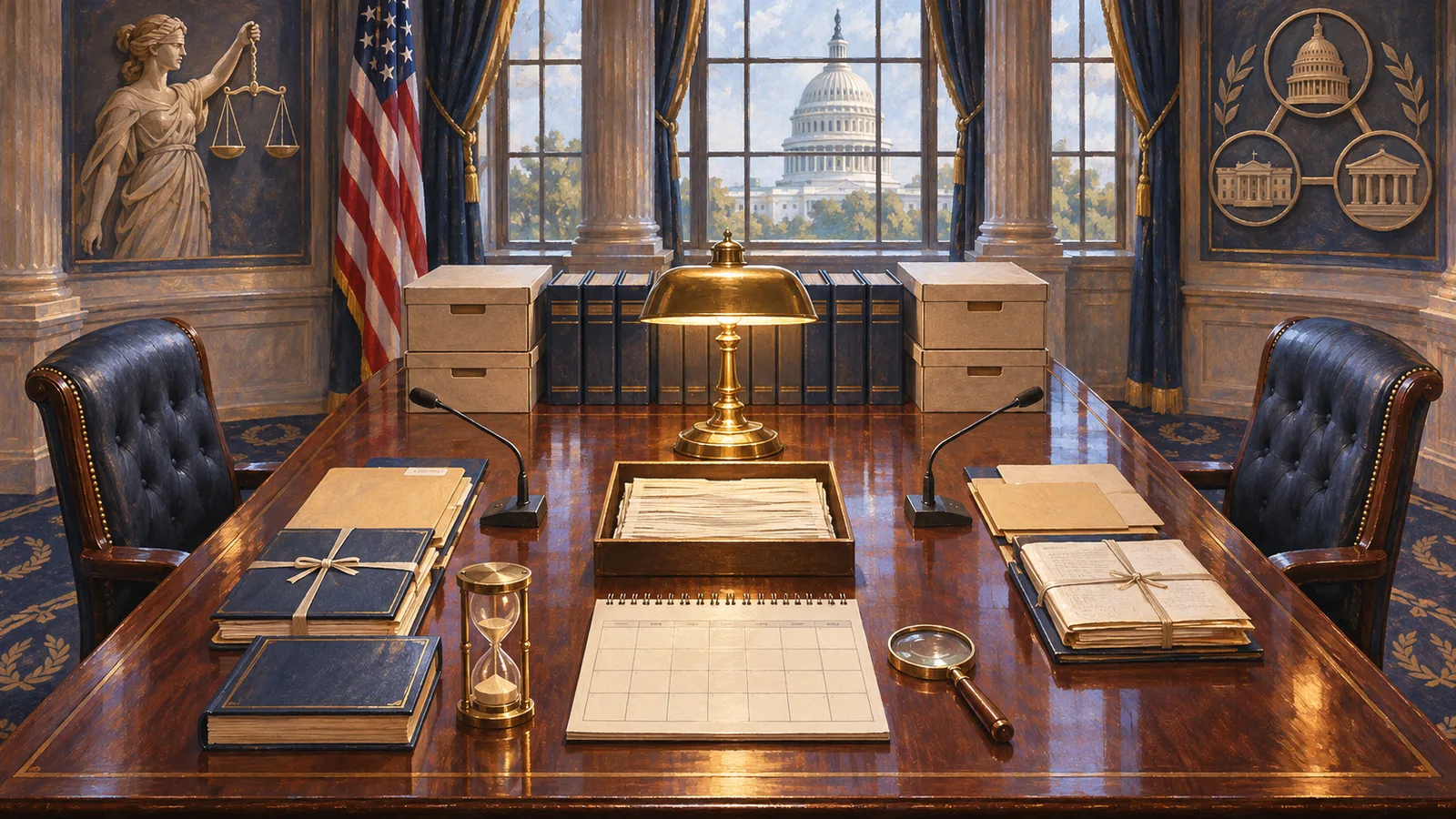
AI-assisted conceptual illustration of congressional record preservation and oversight; it does not depict an actual hearing or meeting.AI-assisted editorial illustration.
Vance has already acknowledged discussing the files
Vance is not starting from a blank public record. In a June 16 appearance on ABC’s *The View*, he responded to questions about the reported Situation Room discussions. ABC News reported that Vance appeared to acknowledge such meetings and said officials confronted questions about files held in another jurisdiction and the need for court approval before release.
That answer is relevant because it offers an alternative frame to the letter’s most aggressive accusation. A meeting about legal barriers, sealed records or disclosure procedure is not automatically evidence of concealment. At the same time, acknowledging discussions does not answer Garcia’s detailed questions about who attended, what options were proposed, or how later decisions were made.
The gap between those two accounts is precisely where records can help. The committee is entitled to ask. Vance is entitled to dispute the premise, invoke lawful privileges where applicable, and provide his own chronology. The public deserves enough verifiable information to distinguish a policy and legal debate from a political damage-control operation.
This evidence-first approach is consistent with our earlier analysis of conflicting reports about Vance’s political plans: public claims should be ranked by provenance, specificity and corroboration, not by how neatly they fit a preferred narrative.
The transparency test has three measurable parts
The coming response should be judged on more than whether Vance accepts Garcia’s wording.
1. A complete meeting chronology
The simplest test is whether the vice president’s office supplies a dated list of relevant meetings, attendees and broad subjects. Sensitive legal advice or classified information may require redaction, but a privilege claim should identify the category withheld and its legal basis. A blanket refusal would leave the most important factual questions unanswered.
2. A distinction between disclosure law and political strategy
Officials can legitimately discuss court seals, grand-jury secrecy, victim protection and privacy. They can also discuss politics; administrations do that routinely. The key issue is whether legal constraints were accurately described and consistently applied, or used selectively as a pretext. Any committee report should quote underlying documents in context and make room for the administration’s rebuttal.
3. A documented chain of decision-making
Garcia links the Situation Room discussions to the Maxwell interview and transfer. That is a serious allegation, but sequence alone does not prove a bargain. Establishing a causal connection would require records or testimony showing who proposed, approved and implemented each decision, and why. The committee should publish evidence strong enough for readers outside its partisan coalition to evaluate.
AI-assisted conceptual illustration contrasting transparency, evidentiary standards and legitimately protected records; it is not a documentary scene.AI-assisted editorial illustration.
The opposing evidence cannot be edited out
Any fair inquiry must include evidence that cuts against the committee’s theory. Vance publicly said the administration wanted to release files but faced court constraints. He has also criticized the administration’s communications around the matter. Those statements do not settle what happened behind closed doors, but they are relevant to intent and must be weighed alongside hostile interpretations.
The White House’s broader posture also belongs in the record. AP reported that White House counsel Will Scharf warned Garcia last week against threats or abusive process directed at executive-branch officials. That response signals a coming institutional fight over congressional authority, executive privilege and the line between oversight and political harassment. It does not answer the Vance-specific factual questions, but it is an opposing argument the committee cannot simply ignore.
There is also uncertainty about timing and power. Garcia is currently the ranking member, while Democrats’ subpoena authority is expected to expand when the new Congress convenes in January. Wednesday’s letter is therefore both a present request and a preview of a stronger future investigation. Compliance, negotiation or litigation could change the evidentiary picture well after the December 2 deadline.
What a credible Vance response would look like
A strong response from JD Vance would not need to endorse the committee’s accusations. It would correct any factual errors, identify meetings and participants, explain the legal constraints he understood at the time, and disclose or describe the records supporting his account. If specific information cannot be released, the office should say why rather than treating every question as illegitimate.
That standard mirrors a broader principle we applied to Vance’s recent case for FAA modernization: claims become more persuasive when they are tied to a public scorecard. Here, the scorecard is straightforward—chronology, participants, legal authority, decision ownership and corroborating documents.
The committee has obligations too. It should preserve exculpatory material, separate verified evidence from inference, invite testimony under fair conditions and avoid declaring conclusions before the requested records arrive. Oversight earns legitimacy by showing its work.
The morning takeaway
The verified development on November 18 is a formal Democratic oversight request centered on JD Vance and reported Situation Room discussions. The unresolved questions concern what those meetings were for, what Vance recommended and whether later actions were connected. The public record presently contains an accusatory committee account and Vance’s earlier explanation that officials were confronting legal and procedural barriers to release.
Those accounts can be tested. The next meaningful news will be a documented response, authenticated records, sworn testimony or a legally grounded refusal—not another round of slogans. Until then, the responsible conclusion is neither exoneration nor condemnation. It is a demand for evidence proportionate to the seriousness of the allegation.
*Vance Force is an independent fan community and is not affiliated with, authorized by or speaking for JD Vance, the White House, any campaign or any government office. This article separates verified public records from allegations and analysis.*