JD Vance’s White House Answer Redefines Loyal Dissent
At the November 20 White House news conference, JD Vance supported President Trump’s authority while declining to say he would have ordered the same Iran strikes. The distinction offers a new test of loyalty, restraint, and presidential judgment.
By Vance Force Editorial Desk
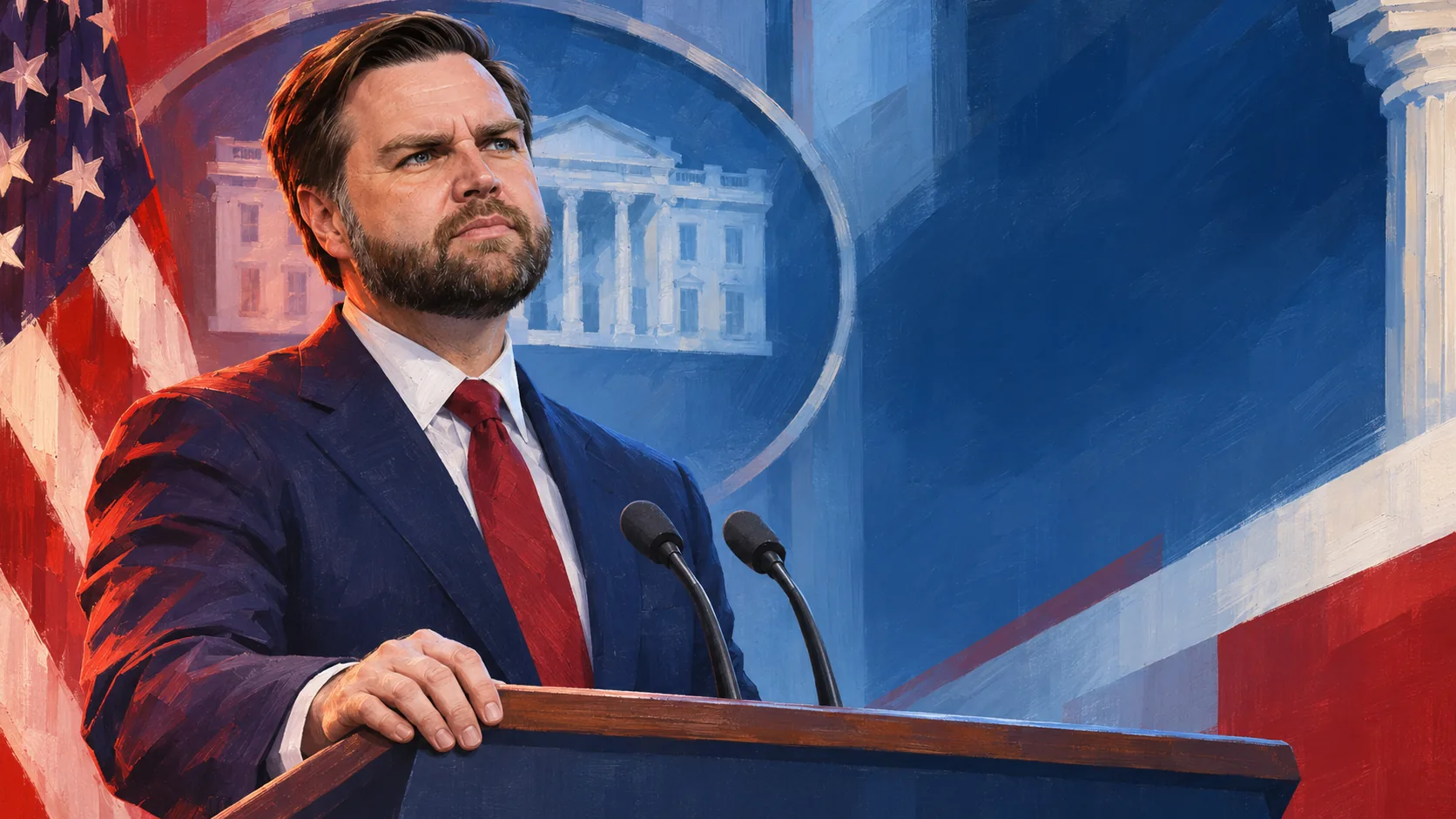
AI-assisted editorial illustration of JD Vance loyal dissent at a White House-style podium under divided red and blue light.
DISCUSSION OPENRead the source brief, then add your evidence and argument.
Friday's White House news conference offered a revealing answer to a question that has followed Vice President JD Vance since the midterm elections: how does a vice president publicly defend an administration while preserving an independent judgment about its most consequential choices?
Vance did not repudiate President Donald Trump's decision to strike Iran. He affirmed the goal of preventing Iran from obtaining a nuclear weapon and described supporting the president as part of his job. Yet when asked whether he personally would have ordered the strikes—and whether the conflict was worth the Republican Party's steep congressional losses—he stopped short of saying yes. That distinction was the most important political fact of the afternoon.
It is tempting to label the exchange either a break or a surrender. The evidence supports neither simple reading. What emerged was a form of loyal dissent: agreement on the administration's stated objective, acceptance of the president's constitutional authority, and continued distance from a personal endorsement of the chosen course.
According to Reuters' full report, Trump said Vance's post-election diagnosis was accurate but incomplete. The president believed the vice president should also have said that the strikes were necessary and that he would make the same decision again. Vance, answering later, defended the goal of denying Iran a nuclear weapon and said the original decision belonged to Trump.
The Associated Press live account recorded a notable softening in Trump's tone. He called Vance's analysis “accurate” even while insisting he would authorize the military action again. The Guardian's contemporaneous coverage similarly reported that Trump said he was not unhappy with Vance's statement.
Those facts matter because they narrow the disagreement. Trump and Vance were not arguing in public about whether Iran should be prevented from acquiring a nuclear weapon. They were divided over how explicitly Vance should validate the means, and how directly the administration should acknowledge the domestic political cost.
Two claims Vance is trying to hold together
Vance's position rests on two claims that can coexist but create real pressure.
First, he treats the nuclear objective as legitimate and urgent. That places him inside the administration's security framework, not outside it. Second, he has argued that the war contributed heavily to Republican losses by raising costs and alienating voters. That is not just a tactical complaint about messaging. It is an argument that foreign-policy choices carry measurable consequences at home.
Our earlier analysis of the Iran memorandum and the durability test for Vance's diplomacy focused on whether a negotiated framework could survive presidential skepticism. Friday's exchange introduced a different question: can Vance's political identity survive if he is expected to endorse not only the president's authority, but also the counterfactual claim that he would have made exactly the same decision?
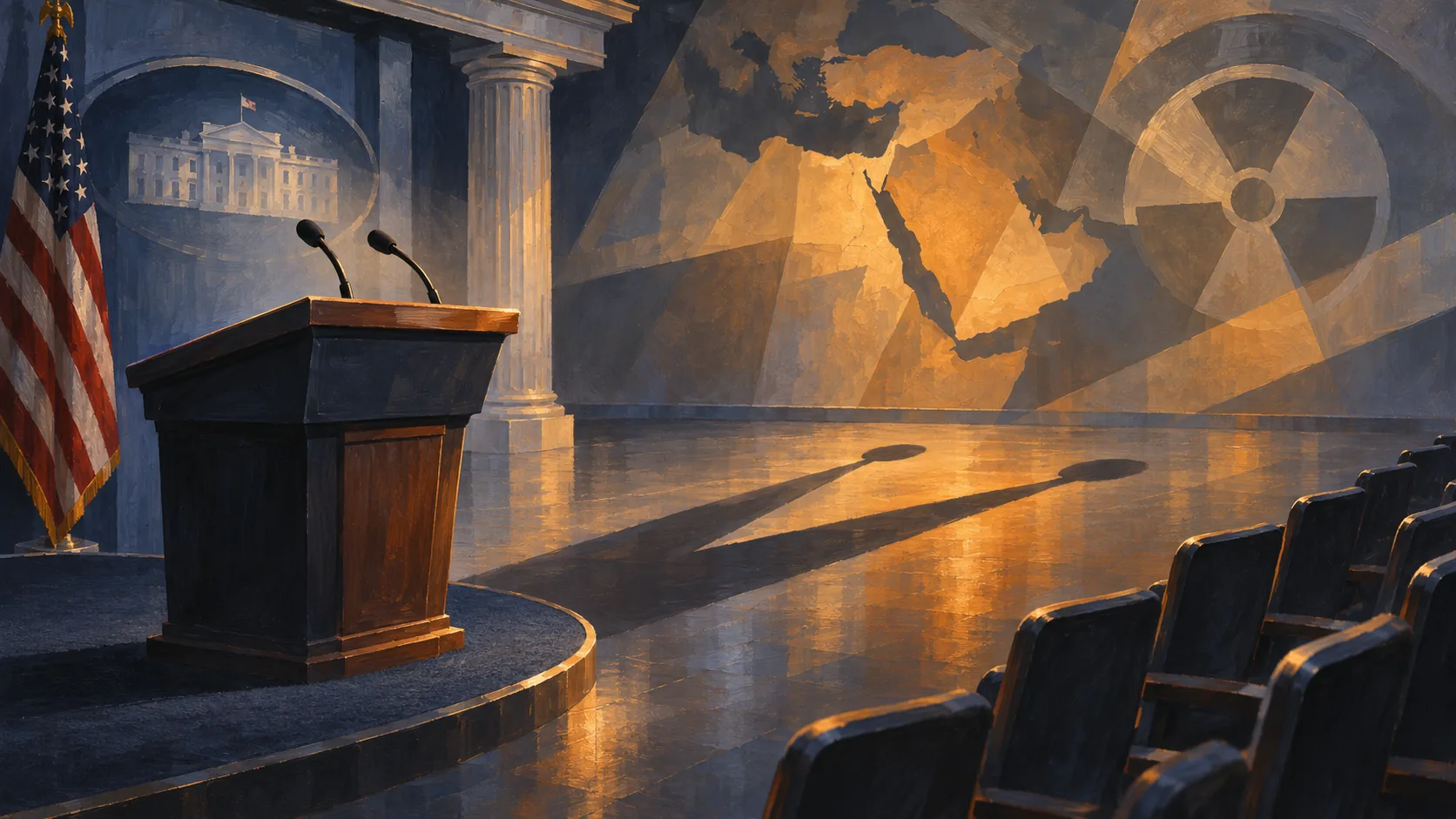
AI-assisted conceptual illustration of the institutional and personal choices behind a difficult foreign-policy answer.AI-assisted editorial illustration.
That counterfactual is where Vance drew the line. He did not criticize Trump in the briefing room. He also did not adopt Trump's answer as his own. For supporters who value both loyalty and restraint, the distinction may look disciplined. For critics, it may look like an effort to receive credit for dissent without accepting the risk of an outright disagreement.
Why a non-answer can still be substantive
Political commentary often treats every refusal to answer as empty evasion. Sometimes it is. Here, the refusal conveyed information because the requested answer was so specific. Vance was invited to say that, if the power had been his, he would have launched the same strikes. He instead returned to institutional roles: the president made the decision; the vice president supports the president.
That formulation protects three things at once.
It preserves constitutional hierarchy
The vice president is not a parallel commander in chief. Emphasizing who made the decision avoids pretending that Vance possessed authority he did not have. This is the strongest institutional defense of his answer.
It preserves a record of skepticism
Vance has spent years cultivating an identity more cautious about open-ended military commitments than many traditional Republican national-security voices. A categorical retrospective endorsement would make that history harder to reconcile with his current position.
It avoids a direct rupture
Trump did not demand Vance's resignation or reject his electoral diagnosis. He publicly accepted much of it. Vance, in turn, did not accuse the president of wrongdoing. The pair left a visible disagreement bounded by a larger statement of unity.
There is opposing evidence to consider. A president needs advisers who can convert private objections into clear recommendations. If Vance believes the strikes were mistaken, voters may reasonably ask him to say so plainly. If he believes they were justified, voters may ask why he will not say he would have made the same choice. Institutional language cannot permanently replace a policy judgment.
The 2028 test is about decision-making, not choreography
The news conference also placed Vance next to Secretary of State Marco Rubio while reporters raised the question of presidential succession. AP described the briefing as a high-profile opportunity for both men, and Trump declined to name a preferred successor. Vance has separately said he will decide next year whether to run, according to reporting published November 17.
That makes Friday's answer more than an episode of White House stage management. A future presidential candidate cannot rely forever on the sentence “my job is to support the president.” The job he may seek would require him to decide.
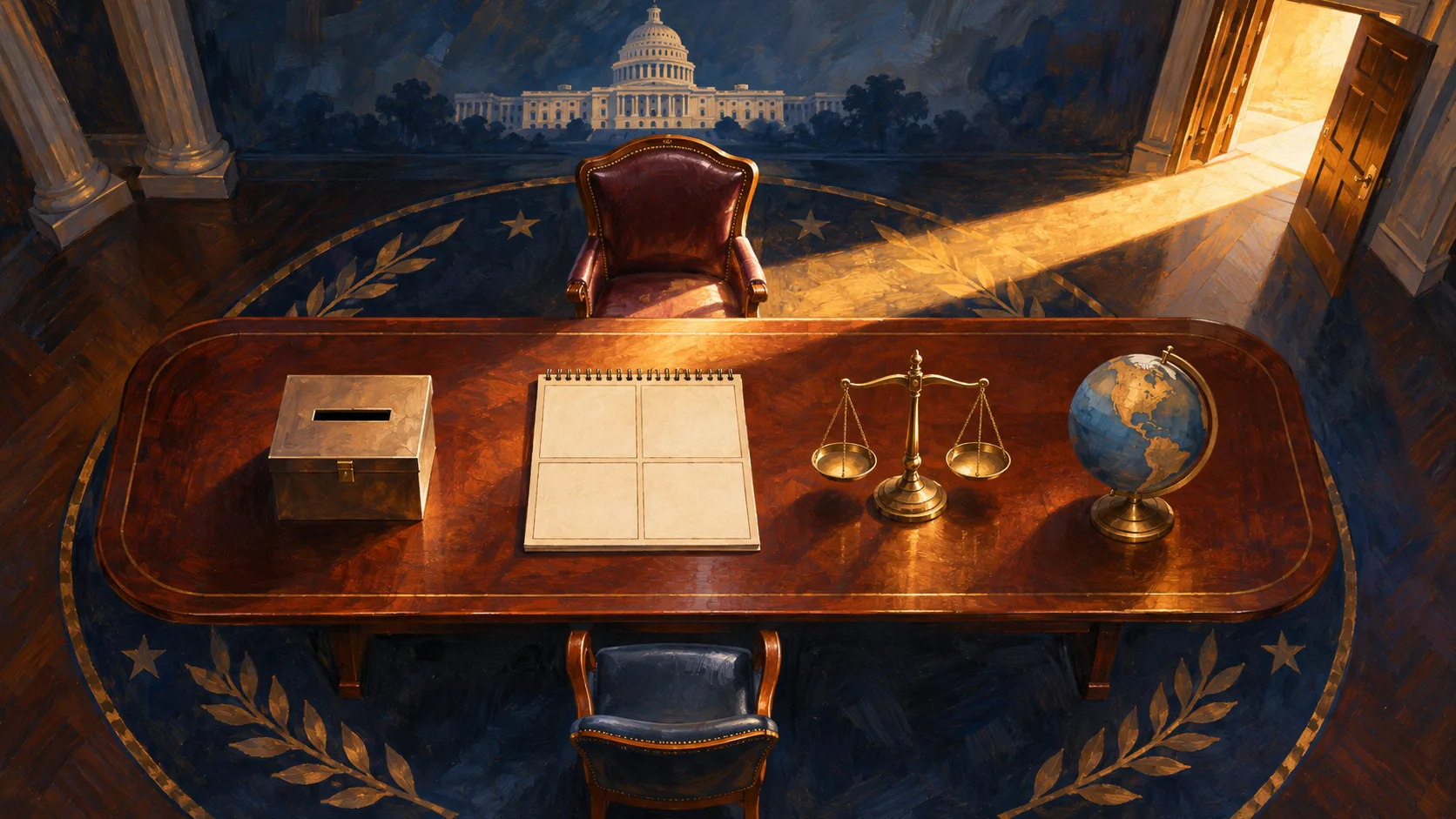
AI-assisted conceptual illustration of succession, judgment and the path from vice-presidential loyalty to presidential responsibility.AI-assisted editorial illustration.
The useful question for 2028 is therefore not whether Vance looked sufficiently loyal at one podium. It is whether he can explain a decision rule. Under what conditions should the United States use force to prevent nuclear proliferation? What evidence threshold is required? How should leaders weigh military objectives against energy prices, congressional support, alliance cohesion, and the risk of a long conflict? What diplomatic off-ramp must exist before force begins?
A coherent Vance doctrine would answer those questions in advance. It would also acknowledge uncertainty. Intelligence can be incomplete, adversaries can miscalculate, and even a tactically successful strike can produce strategic costs that emerge months later. Supporters should want a standard that can be applied beyond Iran, not a slogan tailored to one dispute.
What loyal dissent must deliver next
Friday's exchange gave Vance room to maintain both team loyalty and an independent profile. That room will narrow unless it produces concrete work.
One test is whether his reassigned domestic portfolio becomes a serious program rather than a political refuge. Anti-fraud enforcement can protect public benefits, but it requires transparent metrics, due process, and evidence strong enough to distinguish proven schemes from partisan allegations. A vice president who argues that policy must be judged by its real-world costs should apply that same discipline at home.
Another test is whether Vance continues to explain the midterm result with verifiable evidence. Our earlier review of Vance's turnout diagnosis after the election emphasized that a persuasive postmortem must separate voter data from political intuition. The same standard applies to claims about war, prices, and public opinion.
Finally, Vance will have to show whether his caution changes decisions before they are made. Retrospective distance is politically useful; prospective judgment is presidential. Advising restraint privately, explaining it publicly, and proposing a workable alternative are different tasks. A credible national leader must connect all three.
The bottom line
JD Vance did not disown Trump, and Trump did not disown Vance. The vice president defended the administration's nuclear objective but withheld the personal endorsement the president wanted. That is a meaningful distinction, not yet a complete doctrine.
For admirers, the moment showed discipline: Vance remained loyal without erasing his own analysis. For skeptics, it showed ambiguity designed to preserve multiple political futures. Both interpretations remain plausible. The evidence that resolves them will come from what Vance does next—how he defines the limits of force, how he measures domestic consequences, and whether his private caution becomes public policy before the next irreversible decision.
*Vance Force is an independent fan community. This analysis is not affiliated with, authorized by, or written on behalf of JD Vance, the White House, any campaign, or any political party. AI-assisted illustrations are clearly labeled and are conceptual, not documentary photographs.*