JD Vance’s Texas Refinery Plan Enters a $150 Million Federal Push
JD Vance’s Tyler refinery expansion now sits inside a $150 million federal Defense Production Act push, but key funding and capacity details remain pending.
By Vance Force Editorial Desk
AI-assisted editorial illustration of JD Vance reviewing refinery plans in a control room at sunrise, representing the JD Vance refinery expansion policy.
DISCUSSION OPENRead the source brief, then add your evidence and argument.
Vice President JD Vance’s promise to expand a Texas oil refinery moved closer to a federal financing framework Thursday, when the White House and Department of Energy opened a broader Defense Production Act push for petroleum production, refining and fuel logistics.
The new documents do not yet award money to the Tyler refinery owned by Delek US Holdings. They do something more preliminary but still important: declare refining capacity essential to national defense, authorize federal financial tools and announce up to $150 million for projects across the country. The Energy Department says its selection process remains underway.
That distinction matters. Vance announced the Tyler project at an October 13 campaign rally as an expansion that would produce millions of additional gallons of commercial and military-grade fuel. Ten days later, the administration has established a national funding lane—but it has not publicly disclosed Tyler’s federal share, added capacity, construction schedule or binding agreement.
The **JD Vance refinery expansion** is therefore a verified industrial-policy initiative with an unfinished project record. Its potential is clearer today, and so are the questions that must be answered before anyone can translate the announcement into lower fuel prices or new refinery jobs.
What Changed on October 22
President Donald Trump’s new presidential determination finds that domestic petroleum production, refining, pipelines, storage and marine terminals are essential to national defense. It says private industry cannot provide the needed capacity quickly enough because of financing constraints, long lead times, permitting, infrastructure bottlenecks and supply-chain limitations.
The determination invokes Section 303 of the Defense Production Act and authorizes purchases, commitments, financial instruments and other support. It also waives several ordinary statutory findings for this expansion effort. That is a significant legal and policy step, but it is not itself a construction contract.
The Department of Energy announcement supplies the financial headline: up to $150 million in Title III funding for petroleum production, storage and logistics projects at U.S. refineries. DOE says the program is expected to increase refining output by millions of gallons per day. It also says selections will be announced later.
This sequence connects directly to Vance. At his October 13 rally in Tyler, the full Roll Call Factbase transcript records him saying that the administration would use the Defense Production Act to expand the Delek refinery. He described the goal as millions of additional gallons of commercial and military-specification fuel.
The fresh development is not a second refinery announcement. It is the national authority and funding framework that could make Vance’s earlier promise possible.
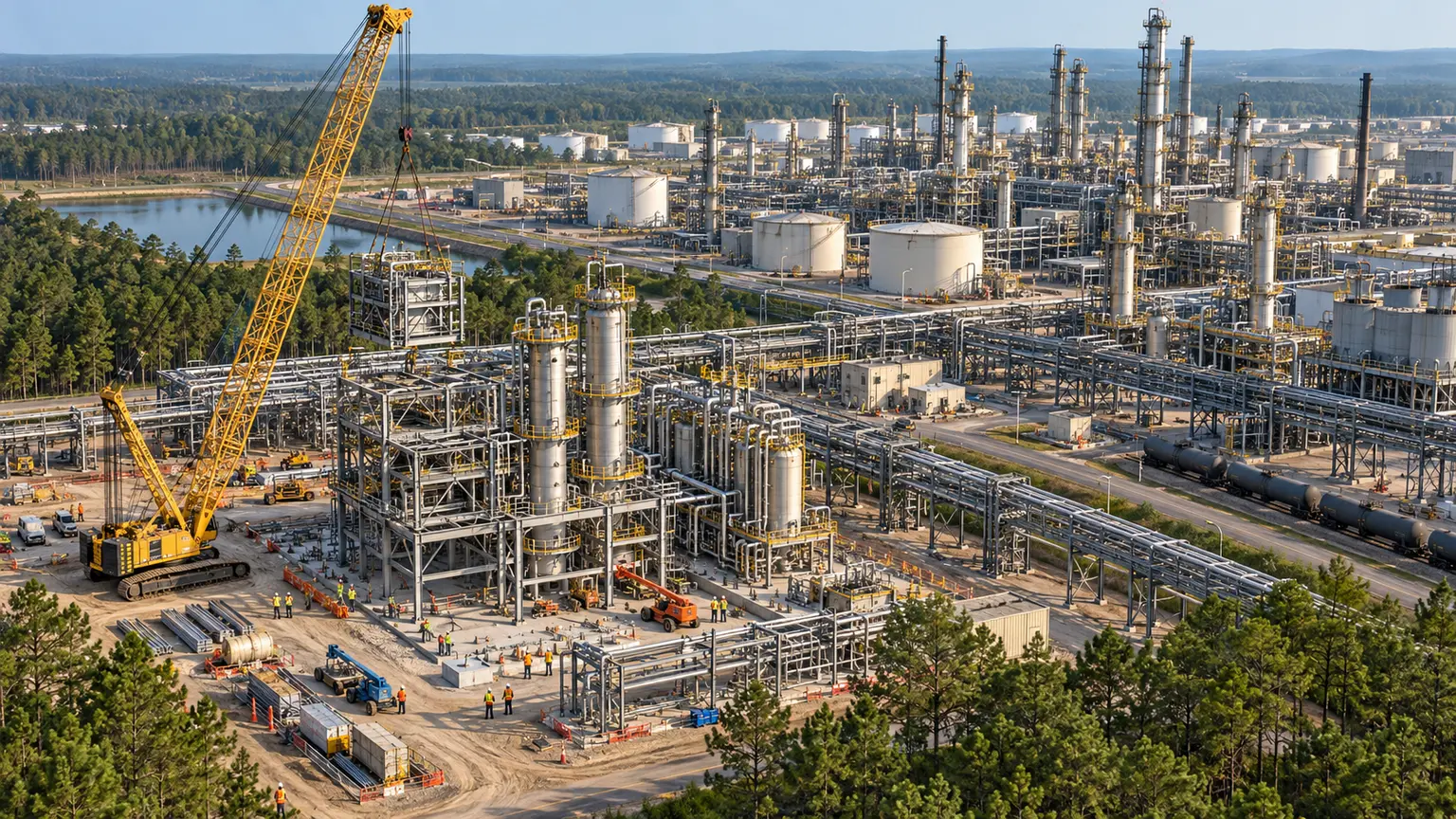
AI-assisted conceptual illustration of an existing refinery expansion; it does not depict confirmed construction at the Tyler project.AI-assisted editorial illustration.
Why the Tyler Project Is Plausible
Expanding an operating refinery is generally more practical than building an entirely new one. Existing plants already have industrial land, experienced workers, crude supply connections, product distribution systems and regulatory histories. Refining executives previously told Reuters that federal support would be better directed toward efficiency improvements and additions at existing facilities than toward new plants that would cost more and take years.
Delek’s Tyler plant is a real, operating asset rather than a proposed greenfield location. The company’s refining overview says the facility produces gasoline, distillates, petroleum coke and liquefied petroleum gas for northeast Texas. Delek reports 302,000 barrels per day of combined crude throughput capacity across four inland refineries. Reuters separately places Tyler’s current processing capacity at approximately 74,000 barrels per day.
Local reporting also supports the employment claim, while stopping short of a numerical project plan. KLTV’s account of the rally says Vance projected hundreds of well-paying jobs. It did not identify the construction scope, dollar value or completion date.
The national capacity backdrop makes incremental expansion worth considering. The U.S. Energy Information Administration reported in June that operable U.S. atmospheric distillation capacity stood at 18.2 million barrels per calendar day on January 1, 2026, down more than 250,000 barrels per day from a year earlier. Two refinery closures removed roughly 400,000 barrels per day, partly offset by smaller gains at existing plants.
In that environment, a project that adds useful product output without waiting for a new refinery site could strengthen resilience. Vance is also right to connect fuel manufacturing with defense readiness: military operations, freight, farming, aviation and emergency response depend on reliable supplies of refined products, not crude oil alone.
Why the Price Claim Needs Restraint
The strongest caution comes from timing. Reuters reported on October 20 that U.S. refineries were already operating at roughly 95% to 100% of capacity while diesel prices reached record highs. Restarting idled equipment or adding new units requires capital, engineering, permitting, equipment and planned downtime. Even a comparatively fast expansion will not create immediate barrels for today’s market.
Prices also move through more than one bottleneck. Crude costs, refinery configuration, seasonal fuel specifications, maintenance, pipelines, inventories, regional distribution and global trade all affect what consumers pay. A Tyler expansion could add supply and still be too small, too distant or too late to determine national pump prices by itself.
That does not make Vance’s affordability argument empty. Additional supply can improve competition and reduce vulnerability at the margin. It does mean the administration should describe lower prices as a policy objective, not a guaranteed project output. Our earlier review of Vance’s economic message and the affordability squeeze reached the same basic test: voters need a mechanism, a timeline and measurable results.
The latest DOE statement does not resolve that test. Its estimate of millions of additional gallons per day applies to the national funding effort, not publicly to Delek’s Tyler facility. Conflating the two would overstate what officials have announced.
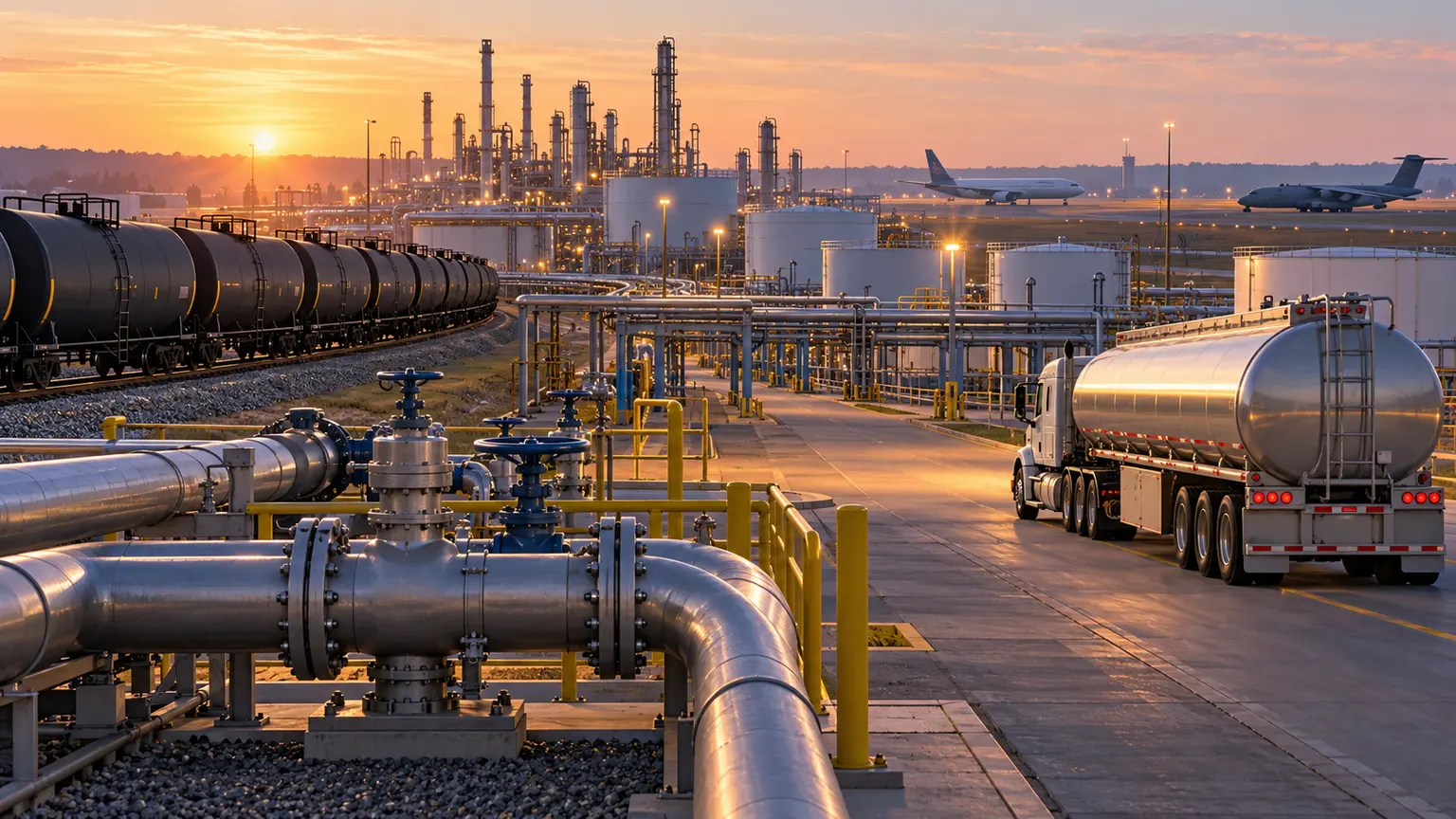
AI-assisted conceptual illustration of fuel logistics and resilience; it is not a photograph of an announced federal project.AI-assisted editorial illustration.
The Missing Terms That Matter
Morning news should separate confirmed action from the next decisions. Four disclosures would make the Tyler plan assessable.
Federal exposure and private capital
DOE should identify whether support is a grant, loan, loan guarantee, purchase commitment or another instrument. It should also show Delek’s private contribution and the maximum taxpayer exposure. Up to $150 million is the nationwide program ceiling announced Thursday, not a verified Tyler award.
Added throughput and product yield
Officials should report how much additional crude the plant could process and how much gasoline, diesel, jet fuel or military-specification fuel it expects to produce. “Millions of gallons” needs a daily or annual baseline and a method that prevents double counting.
Milestones and conditions
A credible agreement would include engineering, permitting, financial close, construction and commercial-operation milestones. Public funding should be released against progress and protected by clawbacks if promised capacity or jobs do not materialize. That accountability standard also applies to the fertilizer portfolio we examined in Thursday’s JD Vance investment analysis.
Price and resilience outcomes
The project should be judged on more than a ribbon cutting. DOE can track regional wholesale product prices, inventories, outage performance and delivered volumes before and after expansion. Defense benefits should be described separately from consumer savings so one objective is not used to obscure weak performance on the other.
A Real Step, Not Yet a Finished Deal
The case for federal action is straightforward: refining capacity fell in 2025, fuel markets are under pressure, and defense readiness depends on dependable domestic logistics. The case against careless intervention is equally real. Government financing can favor one company, shift private risk to taxpayers or promise price relief that arrives long after the political moment has passed.
Vance’s choice of an existing inland refinery gives the policy a more credible starting point than an undefined promise to build a new plant from scratch. The October 22 determination and DOE funding notice also demonstrate that the administration is constructing an actual federal mechanism around his Tyler announcement.
But the public record still stops before the most consequential facts. DOE has not named its selections. The presidential memo names no project. Delek has not publicly quantified Tyler’s expansion in the sources reviewed here. The administration has not disclosed the funding amount, added capacity or completion date.
The accurate morning verdict is therefore narrower than either celebration or dismissal. JD Vance’s refinery plan now sits inside a real $150 million federal push, backed by Defense Production Act authority. Whether it becomes a cost-effective energy-security project will depend on the agreement that comes next—and on whether its promised gallons, jobs and savings can be measured after the applause fades.
*Vance Force is an independent fan community. This report is not affiliated with, endorsed by or produced for Vice President JD Vance, the White House, the Department of Energy, Delek US Holdings or any political campaign.*