JD Vance’s Dumbledore Halloween Softens a Hard Political Feed
JD Vance’s family Halloween post showed a softer digital persona, but the verified evidence supports a modest conclusion—not a claim of voter persuasion.
By Vance Force Editorial Desk
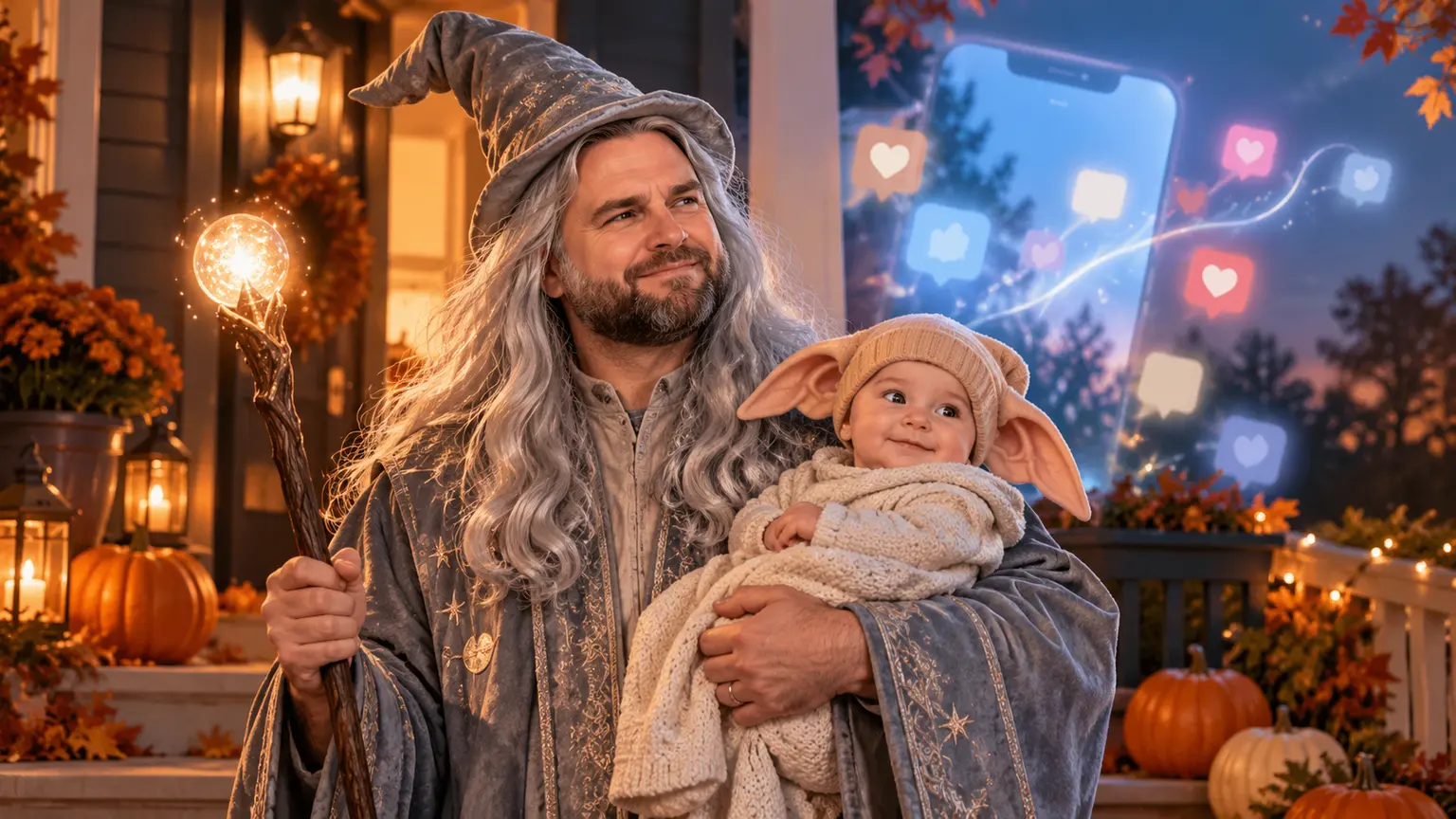
AI-assisted editorial illustration of JD Vance in a Dumbledore-inspired Halloween wizard costume holding a baby beside abstract social-media reactions.
DISCUSSION OPENRead the source brief, then add your evidence and argument.
The easiest way to misread JD Vance’s Halloween post is to treat it as either meaningless family fluff or a masterstroke of political persuasion. It was neither. It was a small, carefully shareable moment that showed how Vance can step out of the Trump administration’s combative online register without actually separating himself from it.
On October 31, the official vice-presidential account posted a family photograph with Vance dressed as a silver-robed wizard modeled on Albus Dumbledore. His infant son wore a knitted house-elf costume. The caption—“Happy Halloween from the Second Family!”—was brief, and the image was plainly a family celebration rather than a policy statement.
That simplicity is the news. Vance has built a public identity that is unusually comfortable with memes, mockery and rapid-response politics. This time, the joke began with his children’s interest in a fantasy series and ended with a conventional holiday greeting. The result did not erase the politics surrounding him. It changed the tone through which people encountered them.
The Verified Moment Was Smaller Than the Reaction
The Independent’s video report confirms the visible details: Vance wore a long gray wig, pointed hat and silver robe while holding his baby in a costume with oversized knitted ears. In the short clip, he introduced himself as “Vice President Dumbledore” and told viewers to have fun, stay safe and eat candy.
A second post on November 1 said the Second Family had welcomed families connected to the military, Secret Service and staff at the vice president’s residence. That matters because it gives the images a concrete setting. It also limits what can responsibly be inferred. The posts document a themed family gathering; they do not establish how representative online praise or criticism was, and they do not measure any effect on voters.
Several outlets collected sharply different reactions. Some viewers praised the baby’s costume and the family theme; others mocked the shiny robe or tried to read the children’s facial expressions. A single photograph cannot establish how anyone in it felt. Nor can a selection of social-media comments stand in for public opinion. The honest description is mixed reaction, not universal acclaim or universal ridicule.
Vance Previewed the Joke Before the Costume
The costume was not a surprise improvised for the camera. During an October 29 town hall in Texas, Vance explained that his children were enthusiastic about Halloween and the Harry Potter stories. A full Roll Call Factba.se transcript records him saying he planned to dress as Dumbledore and joking that the white hair and beard made the character resemble “fat old JD.”
That exchange supplies useful primary evidence about intent. Vance framed the costume first as a choice shaped by his children and second as a chance to make fun of his own appearance. The later image followed that explanation. It is therefore more defensible to call the post self-deprecating family branding than to assign it a hidden campaign message.
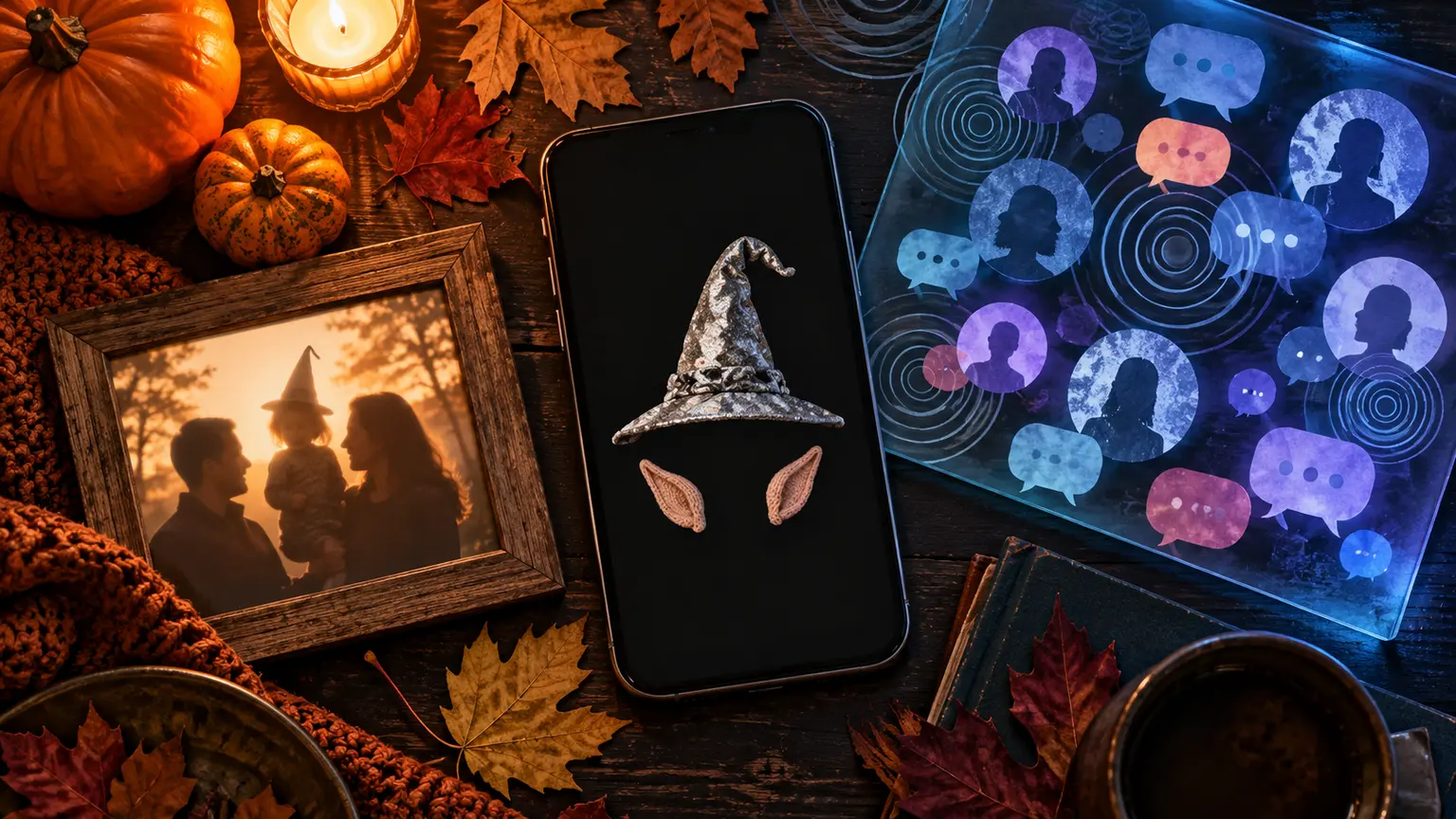
AI-assisted conceptual imagery contrasting a private family ritual with public digital interpretation; it is not a photograph of the Vance family.AI-assisted editorial illustration.
A Family Post Changes the Social-Media Register
The contrast with Vance’s 2025 Halloween post is clear. Last year, he dressed as the exaggerated “Fat JD” meme that spread after his Oval Office confrontation with Ukrainian President Volodymyr Zelenskyy. People’s contemporary report described a video that repeated his “say thank you” line and turned an adversarial political moment into a joke at his own expense.
The 2026 version is less combative. Vance is still willing to become the object of the joke, but the frame is domestic rather than geopolitical. A baby, a porch and a family theme give supporters an image of normal life at the vice president’s residence. Critics can still parody the costume, yet the original content offers less provocation to push against.
That shift is politically useful without proving a calculated strategy. Public officials routinely share holiday photographs. Vance’s office did not need a complex message plan to recognize that a warm family image travels farther than a press release. At the same time, viewers should resist turning ordinary fatherhood into evidence for or against policy positions. The picture humanizes; it does not answer questions about affordability, war, immigration or executive power.
Warmth Is Not the Same as Persuasion
Political communication often confuses reach with conversion. A widely shared costume can expose people to a more relaxed version of Vance. It cannot show that skeptical voters changed their minds, that supporters became more likely to vote, or that the audience even watched beyond the first image.
That caution is especially important one day before the midterm election. Our analysis of Vance’s national midterm network examined the relationships and future political capital produced by rallies and fundraising. A holiday post operates differently. It can soften the edges of a persona, but it cannot deliver a district or settle speculation about 2028.
The Broader Feed Makes the Contrast Matter
The timing also places Vance’s post beside a much harsher stream of administration content. An Associated Press report published over the weekend examined Halloween-themed and anti-fraud posts from other administration accounts that critics described as inflammatory. Those examples involved different officials and different messages. They should not be attributed to Vance.
The comparison is still analytically useful. The same administration can communicate through ridicule, enforcement imagery, policy claims and family ritual within a few scrolls. Vance’s Dumbledore post occupied the gentlest end of that spectrum. It invited viewers to react to costume quality and parenthood rather than to a named political opponent.
This does not prove a disagreement inside the White House. It shows range. Vance can participate in aggressive partisan messaging and also present himself as a father willing to wear an absurd robe because his children enjoy the theme. Both images are real parts of his public presentation; neither alone is complete.
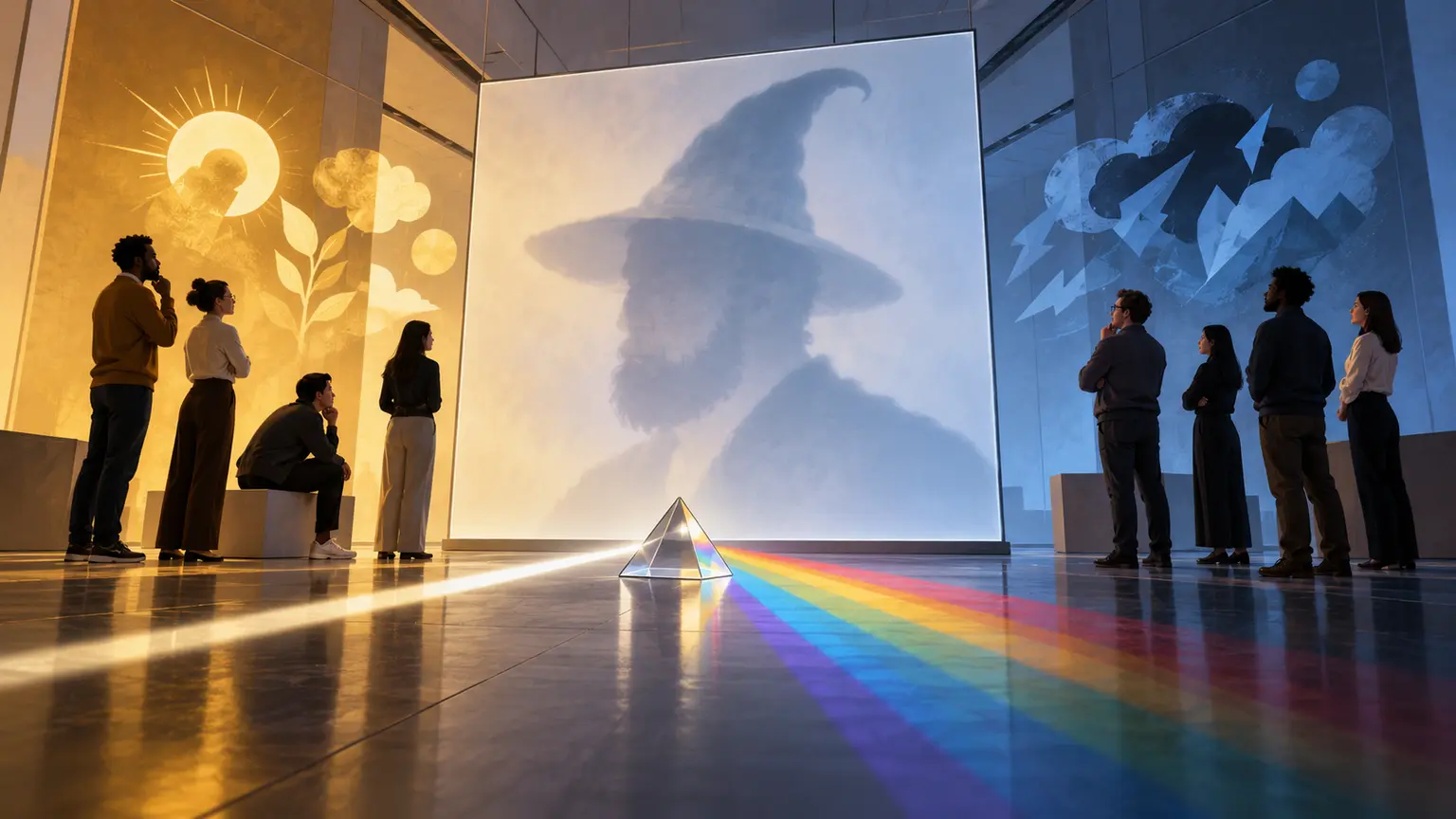
AI-assisted conceptual imagery showing one political image producing different readings; it does not depict a real gallery or event.AI-assisted editorial illustration.
Memes Let Supporters and Critics See Different Vances
The deeper pattern predates this weekend. A 2025 Washington Post examination of Vance face memes found that supporters and opponents could use the same altered image for opposite purposes. Admirers saw a future standard-bearer who was in on the joke. Critics saw awkwardness, opportunism or a target for ridicule.
The Dumbledore costume works in the same way, though it was not an altered image. Supporters can see a young father with enough confidence to look silly in public. Critics can see costume-pageantry substituting for substance or can revive unrelated disputes. Casual viewers may simply see a holiday clip. The image does not contain one compulsory interpretation.
Vance benefits from that ambiguity because he rarely has to defeat a meme outright. By sharing or reenacting the joke, he becomes a participant in its meaning. That tactic can reduce the sting of ridicule and reward supporters who enjoy an online-savvy politician. It can also look overly calculated when every viral moment is folded back into a political brand.
The opposing evidence is important. Not every family post is a tactic, and not every joke is a rehearsal for higher office. Vance disclosed the costume before Halloween, tied it to his children and then shared a familiar seasonal greeting. The most elaborate strategic readings go beyond the available facts.
What This Can—and Cannot—Tell Us Before Election Day
On Monday morning, Vance was scheduled to return to overt campaigning in Rome, New York, and Swanton, Ohio. Our verified election-eve itinerary report explains why those stops matter and what remained unknown before the rallies. The transition from a family porch to two contested political regions is a reminder that modern political identity is assembled from both policy fights and low-stakes cultural moments.
The verified conclusion is modest. Vance used the 2026 holiday to present a more domestic, self-mocking version of himself than the political meme he adopted in 2025. Independent reporting confirms the costume and video; the earlier town-hall transcript confirms that he connected the idea to his children before posting it. Reaction was mixed and cannot be quantified from selected comments.
The analytical conclusion is narrower still. A softer post can broaden the emotional range of a politician’s feed, but it does not resolve the harder judgments voters make. Humor may make a public figure more approachable. It cannot substitute for accurate claims, accountable policy or election results.
Sources, Method and Community Disclosure
This article relies on the official October 31 post, the full October 29 town-hall transcript, independent video reporting, and contextual reporting on Vance’s earlier meme strategy and the administration’s wider online style. Event dates are separated from publication dates, and online reactions are described as examples rather than polling.
*Vance Force is an independent fan community. It is not affiliated with JD Vance, the Office of the Vice President, any campaign, or any political party. The illustrations accompanying this article are AI-assisted conceptual imagery, not photographs of the Vance family or a real event.*
JD Vance’s Dumbledore Halloween and Digital Persona