A new Reuters/Ipsos survey places Vice President JD Vance and Secretary of State Marco Rubio at the front of the Republican Party’s very early 2028 conversation. The tempting headline is that Rubio leads Vance, 45% to 43%, among Republican voters who called each man an “excellent” presidential candidate. The defensible conclusion is more modest: both men begin in a strong tier, the two-point difference is smaller than the poll’s margin of error, and the survey did not ask Republicans to choose between them.
That distinction matters because early polling can shape political reality even when it cannot forecast it. Donors, activists, officeholders and media organizations use numbers to decide who looks viable. A loosely phrased “lead” can harden into conventional wisdom. But the Reuters report and the underlying Ipsos materials support a different reading: Vance has broad recognition and substantial Republican approval, while Rubio is a genuine peer competitor. Neither has established a statistically meaningful advantage.
For Vance, the most revealing number is not 43. It is the party’s unresolved question about what should come after Donald Trump. The same survey found Republican and Republican-leaning respondents almost evenly divided between wanting a nominee who governs differently from Trump and one who takes a similar approach. Vance’s challenge is therefore not simply to win a popularity contest. It is to unite two constituencies that currently want different things from the next Republican president.
What the Poll Actually Measured
Ipsos conducted the survey from November 6 through November 9, after the midterm elections, using its probability-based KnowledgePanel. The sample included 1,705 adults. Ipsos reported a margin of sampling error of plus or minus 2.4 percentage points for the full sample, 4.3 points for Democrats and 4.6 points for Republicans. Reuters rounded the party-level uncertainty to five points.
Those details immediately limit the meaning of a 45–43 result. A two-point separation inside a roughly five-point margin is not evidence that Rubio is truly ahead. Repeating the survey with another representative sample could easily reverse the order while remaining consistent with the same underlying public opinion.
The question format imposes a second limit. Respondents were asked what kind of candidate each listed person would be, with choices including excellent, good, fair and poor. They were not shown a primary ballot and required to select one candidate. A voter could rate both Rubio and Vance as excellent, both as good, or neither positively. This is a candidate-quality test, not a vote-intention test.
The published topline reinforces that point. Among registered voters in the Republican-or-leaning-Republican base, 64% rated Vance excellent or good, compared with 62% for Rubio. Only 6% in that column said they had not heard of Vance, versus 14% for Rubio. Vance’s advantage is familiarity; Rubio’s potential advantage is that more voters still have room to form an opinion.
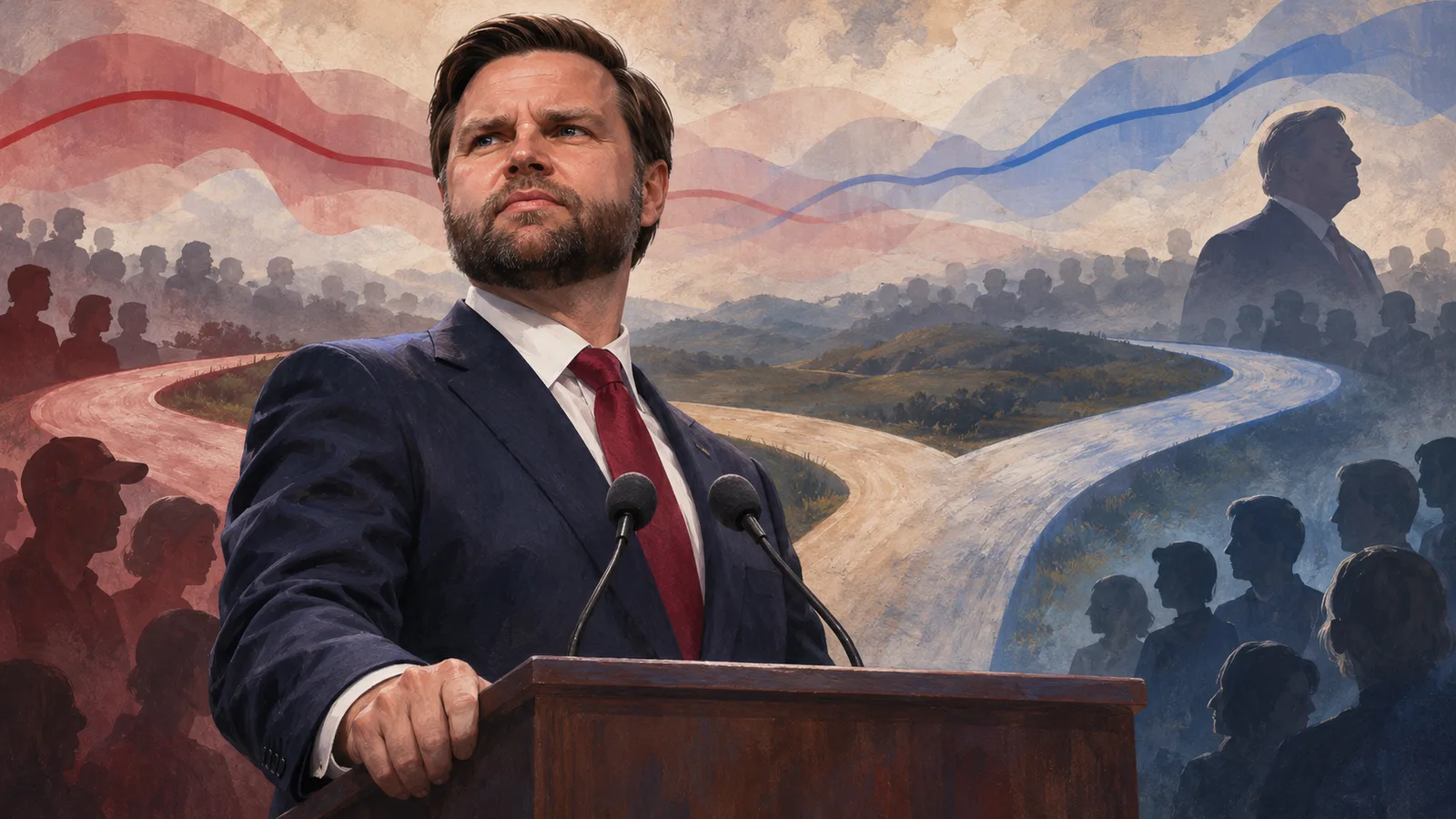
AI-assisted conceptual illustration of survey sampling and overlapping margins of error; it is not an actual Ipsos chart or polling workplace.AI-assisted editorial illustration.
None of these figures identifies a winner. Together, they describe a top tier: two nationally known administration figures with overlapping pools of possible support and different reputational profiles.
Vance’s Recognition Is an Asset—and a Constraint
Vance starts with something most potential candidates spend millions trying to acquire: nearly universal awareness among Republican voters. He is vice president, a frequent campaign surrogate and a central participant in the administration’s policy disputes. The political value is obvious. He does not have to introduce himself before arguing for a nomination.
Recognition, however, is not the same as growth potential. The same detailed table shows more registered Republican-or-leaning voters rating Vance poor than Rubio poor. That difference is not large enough to prove a durable ceiling, but it illustrates the tradeoff. Vance is better known, and more of the electorate has already reached a judgment about him.
Rubio occupies a somewhat different lane. Reuters reported that one voter praised him for doing his job without appearing too ideologically extreme. That anecdote is not representative evidence, but it captures the contrast a future campaign might offer: Vance as the more visible inheritor of Trump-era populism, Rubio as an administration veteran who can claim continuity with less personal identification with every controversy.
Vance also has a counterargument. Visibility creates a record, not merely liabilities. His public break with the administration’s political defense of the Iran war allowed him to say he recognized voters’ frustration. Our earlier analysis of Vance’s post-midterm Iran argument found that his diagnosis was politically sharp even though the evidence did not support making the war the sole cause of Republican losses. That intervention showed a potential 2028 candidate trying to preserve loyalty while acknowledging failure.
The risk is that each act of differentiation can be reversed by the president. On Thursday, Trump redirected Vance away from Iran negotiations and toward domestic fraud work, a shift examined in our morning report on Vance’s new assignment. The episode demonstrates both Vance’s importance and his dependence: he receives consequential portfolios, but the president defines and can abruptly redefine them.
The Bigger Divide Is About Trump’s Governing Style
The poll’s most strategically important finding may be the 52–46 split over the next nominee’s approach. Among Republicans and Republican-leaning independents, 52% preferred someone who would govern differently from Trump, while 46% wanted a similar approach. The Washington Post’s review correctly noted that this exact question had not been asked before, so it should not be treated as a clean trend line.
The coalition split becomes clearer inside the detailed tables. Self-identified Republicans leaned toward a Trump-like approach, while Republican-leaning independents favored a different one by a much wider margin. A viable nominee will need core partisans in primaries and less attached voters in a general election. Vance cannot simply choose one audience and assume the other will follow.
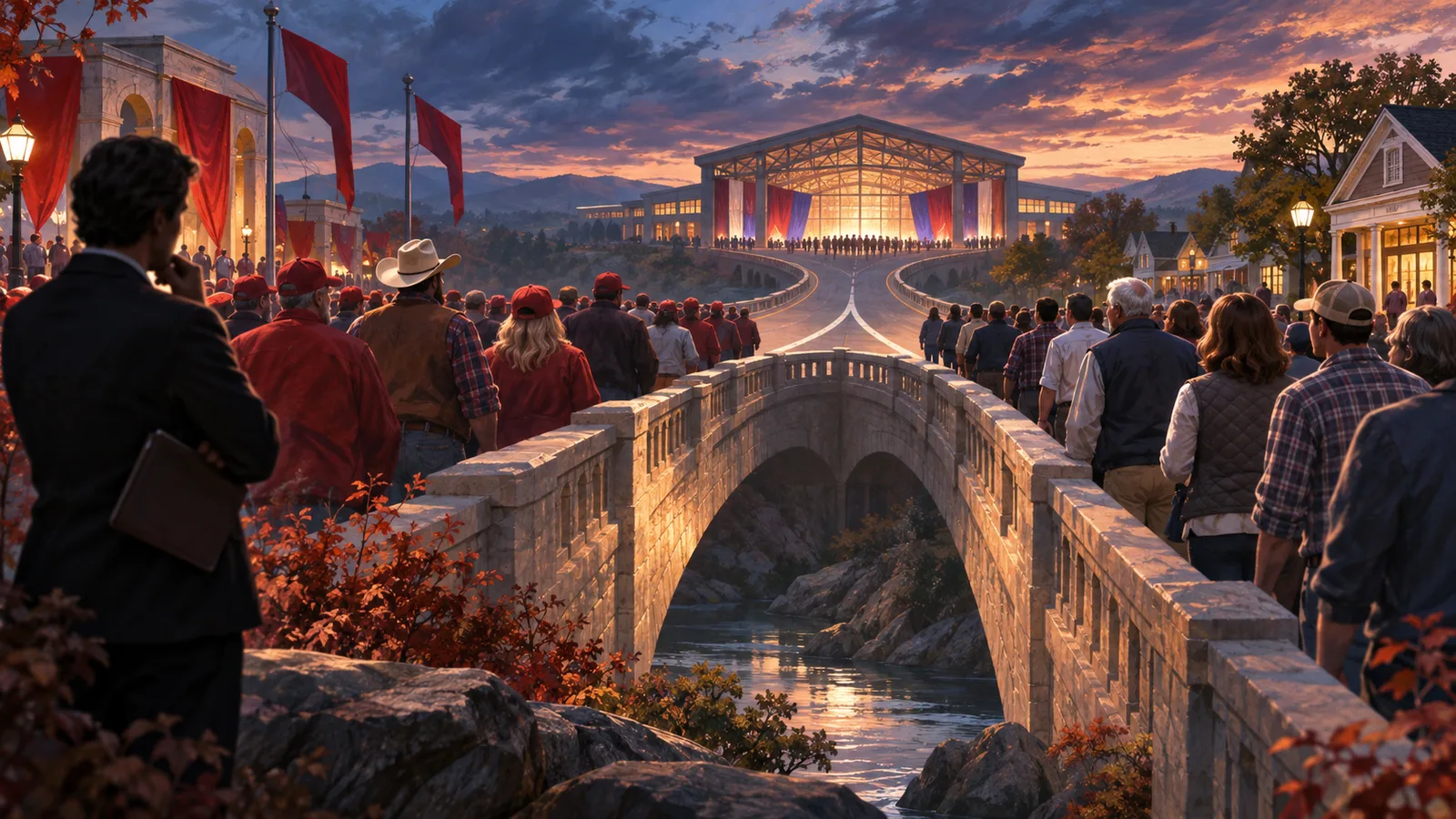
AI-assisted conceptual illustration of a Republican coalition divided between continuity and change; it does not depict a real political event.AI-assisted editorial illustration.
This is where “continuity versus change” becomes too simple. Vance could keep Trump’s themes—border control, industrial policy, cultural conservatism and skepticism of long wars—while changing execution, tone or personnel. He could also argue that his criticism of the Iran conflict represents correction from inside the movement rather than repudiation of it. But that case requires specificity. Voters need to know which Trump decisions he would defend, which he would revise and what governing method would actually change.
Rubio faces the mirror-image problem. His lower level of recognition among the survey’s registered Republican-or-leaning voters may give him room to expand, but it also means his favorable rating rests on a less fully formed public image. A campaign and opposition research would fill that space. Today’s comparatively low-conflict profile cannot be projected unchanged into a contested primary.
Trump Has Not Cleared the Field for Vance
Another source of uncertainty is Trump himself. In a CBS “60 Minutes” interview published November 8, he said he would “probably” endorse a 2028 candidate, then immediately added “not necessarily.” Asked who belonged on the list besides Vance, he praised Rubio and said there were other excellent senators.
That was not an endorsement of Rubio or a rejection of Vance. It was a refusal to make succession automatic. For Vance, an eventual Trump endorsement could be enormously valuable in a Republican primary, but organizing a strategy around an endorsement that may never arrive would be risky. The poll gives him a reason to build an independent case now: his support is already competitive without a formal blessing.
The opposing interpretation also deserves weight. Trump’s praise for several candidates may be bargaining behavior rather than genuine neutrality. Presidents often avoid prematurely surrendering influence over a future field. Vance remains the sitting vice president, enjoys exceptional access to the Republican base and is receiving visible assignments. Those structural advantages do not disappear because Trump complimented Rubio in one interview.
What Would Demonstrate Real Movement
The next useful evidence will not be another isolated “excellent candidate” percentage. Analysts should watch repeated surveys that ask a direct primary-choice question, test ranked alternatives, and report results separately for core Republicans and Republican-leaning independents. Favorability, intensity of support and willingness to consider a second choice would show whether Vance’s coalition is broad or merely familiar.
Performance will matter more than speculation. If Vance’s anti-fraud portfolio produces transparent, legally sound results, he can present an executive record beyond speeches. If his Iran critique is followed by a coherent foreign-policy doctrine, he can show independence without appearing opportunistic. If neither happens, high name recognition may simply mean voters know whom they are declining to support.
The honest reading of the November poll is therefore encouraging but incomplete. JD Vance is not trailing Rubio in any statistically meaningful sense. He is one of two clear early Republican leaders, with stronger recognition and a more defined political identity. The same strengths make his task harder: he must prove that a candidate closely associated with Trump can satisfy a coalition in which many voters want a different approach.
That is a real opening, not a nomination. The 2028 contest remains more than a year from its formal nominating phase, no leading figure has declared, and early opinion can change quickly. Vance’s position is strong enough to command attention—and unsettled enough that every major decision between now and then will become part of the campaign before the campaign officially begins.
Independent fan community disclosure
Vance Force is an independent English-language fan community. It is not affiliated with JD Vance, the White House, any campaign, Reuters, Ipsos or another news organization. This editorial separates reported findings, primary polling data and our analysis, and it does not endorse a 2028 candidate.