2026 Midterm Elections: The Tests That Matter for JD Vance and the Republican Coalition
A source-based guide to the November 3 midterms, the congressional stakes, and the political tests that will shape how JD Vance’s national role is evaluated.
By Vance Force Editorial Desk
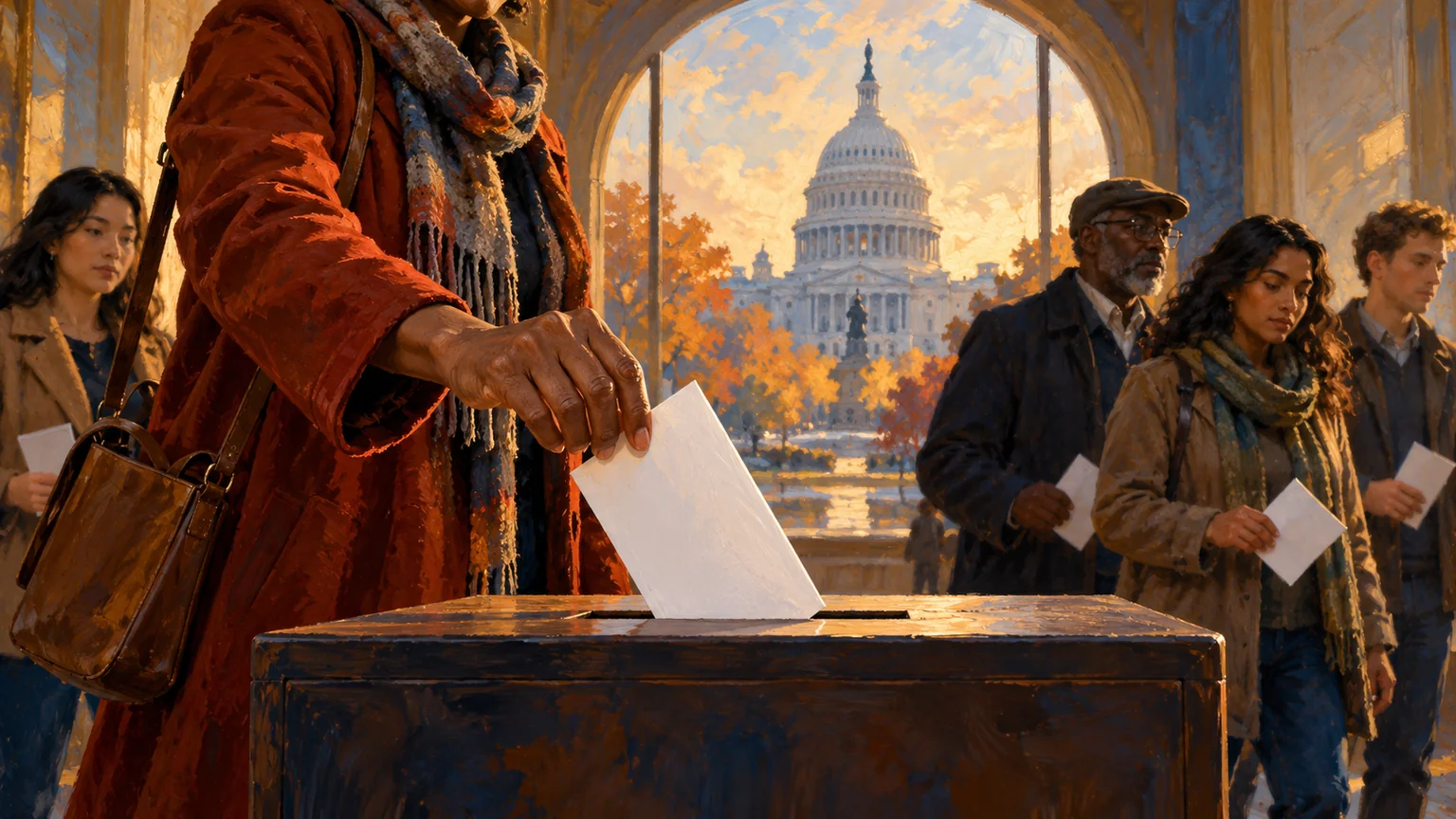
AI-assisted editorial illustration of American voters placing blank ballots in a box with the Capitol in the distance. · AI-assisted editorial illustration, not a documentary photograph.
DISCUSSION OPENRead the source brief, then add your evidence and argument.
Editor’s note: This article is independent analysis, not election advocacy or a prediction. Race conditions can change quickly. Readers should verify registration, ballot, and polling-place information with their state election authority.
The fixed fact is the date; the political meaning is still being made
The 2026 midterm elections will be held on November 3. The Federal Election Commission lists that date in its congressional general-election guidance. Every House seat and the regularly scheduled Senate contests will put national policy into local races, but the result will not be a single national vote. Candidate quality, district boundaries, state conditions, turnout, spending, and late events will interact differently across the map.
For JD Vance, the midterms matter even though he is not running for vice president again in 2026. He is a national administration messenger, a former senator, and an increasingly visible figure in Republican coalition politics. The results will influence how supporters and critics judge his ability to explain the administration’s agenda, mobilize voters who respond to his story, and help candidates translate national themes into local choices.
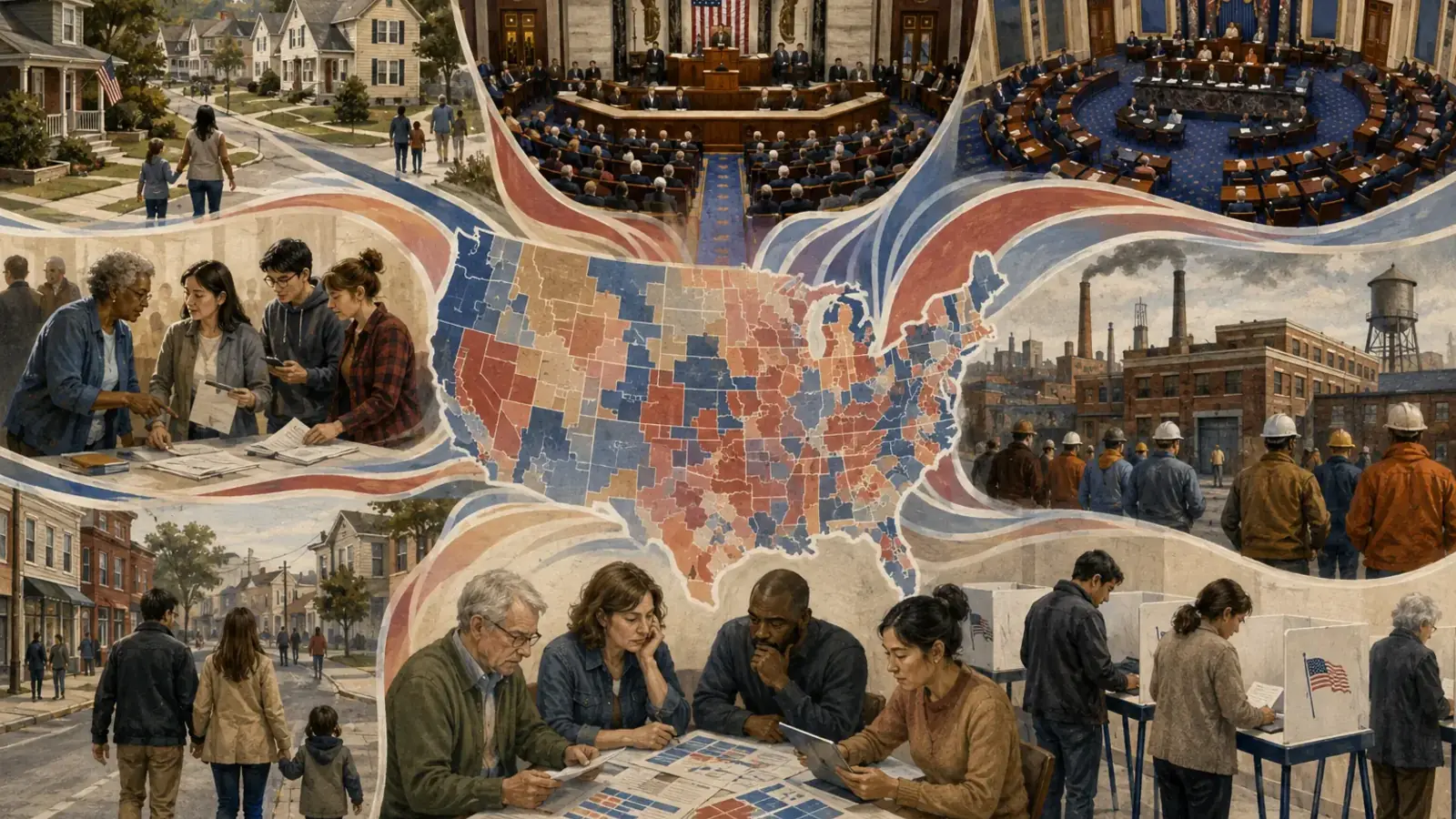
The 2026 midterms are a collection of state and district contests, not a single national ballot.
Test one: can a presidential coalition turn out without the president on the ballot?
Midterm electorates are not identical to presidential electorates. The practical question for Republicans is whether voters activated by Donald Trump in a presidential race also participate in congressional elections when his name is absent. Reuters reported that Trump expanded his role at the September Republican midterm convention and that party officials viewed the gathering as an opportunity to rally voters before November 3. Vance’s place on the program makes him part of that turnout experiment.
The useful evidence will come from more than the national result. Analysts should compare turnout patterns in industrial counties, fast-growing suburbs, rural areas, and places with large populations of occasional voters. If Vance campaigns in a race, the honest question is not whether a crowd was enthusiastic. It is whether participation or persuasion changed relative to comparable places and prior midterms.
Test two: does the economic message survive contact with household experience?
The administration is emphasizing manufacturing, taxes, energy, public safety, and national strength. Vance is particularly associated with the argument that industrial capacity and working-family security belong together. Voters, however, experience an agenda through prices, paychecks, borrowing costs, job stability, health access, and local services.
That difference between a national statistic and a household judgment is central to the midterms. A new plant may be important to a region while higher costs dominate a family’s immediate decision. A tax provision may be popular while implementation remains confusing. An energy policy may promise long-run capacity while producing contested short-run effects. Strong political analysis should identify both the policy and the voter’s likely point of contact with it.
Test three: candidate independence versus national alignment
Republican candidates need the administration’s voters, money, and message, but many also need room to respond to their own states and districts. Too little alignment can weaken base enthusiasm. Too much can prevent a candidate from addressing local concerns or persuading voters who distinguish between a congressional candidate and the president.
Vance’s value as a campaign surrogate will be tested by whether he can support alignment without erasing local identity. His biography and manufacturing focus may travel well in some regions. Other contests will turn more heavily on agriculture, housing, abortion, immigration, foreign policy, or the quality of local government. A national messenger succeeds when the message adapts without becoming contradictory.
Test four: money is abundant, but attention remains scarce
The FEC’s April statistical summary shows how early and large the 2025–2026 financial cycle had already become. Through December 31, 2025, congressional candidates reported approximately $1.5 billion in receipts, party committees about $834 million, and PACs about $4.6 billion. Those figures are a historical snapshot rather than a current total, but they show that the campaign began with immense financial capacity.
Money can buy advertising, organizers, data, and legal preparation. It cannot guarantee that voters believe a message or even notice it. The September convention illustrates the competition for attention: Reuters noted that the event would share the media environment with major sports programming. Campaigns will face the same problem across every platform. The most effective message may be the one that is specific enough to be useful, repeated by trusted local voices, and supported by evidence voters recognize in their own lives.
Test five: governing competence before electoral ambition
It is tempting to convert every Vance appearance into a story about 2028. That may attract searches, but it can obscure the more immediate test. Voters in 2026 are evaluating an administration in office and candidates seeking power in Congress. Vance’s future standing will depend in part on whether he is seen as helping govern, explain decisions, and take responsibility for results—not merely positioning himself for a later contest.
This is why Vance Force should use “JD Vance 2028” carefully. The phrase can organize legitimate analysis of future prospects, but it must not imply a declared candidacy when none has been verified. The midterm result will be evidence about the coalition and political environment, not proof of a 2028 outcome.
A responsible election dashboard
Use official election authorities for dates, registration rules, and results.
Label campaign statements as campaign statements and government claims as government claims.
Date every race rating and poll; describe the sample and uncertainty when available.
Separate national mood from district- and state-level evidence.
Correct projections and factual errors visibly instead of silently rewriting them.
Do not present this independent fan community as a campaign, fundraising committee, or official voter-contact operation.
What the result can and cannot tell us
The midterms can show whether the Republican coalition retains congressional power, where it gains or loses support, and which messages traveled across different electorates. They can reveal something about Vance’s effectiveness as a surrogate and interpreter of the administration. They cannot isolate one person’s effect from every candidate, issue, and event, and they cannot decide a nomination two years in advance.
The best Vance-centered coverage will therefore follow a disciplined sequence: record what happened, identify the source, distinguish the administration’s claim from independent evidence, compare outcomes with stated goals, and invite members to debate the strongest competing explanations. That approach can make an election article useful after Election Day instead of disposable before it.