JD Vance’s Factory-Jobs Claim Meets a Harder National Test
JD Vance’s claim of 72,000 new manufacturing jobs is supported by federal data, but longer baselines and tariff-linked closures show why the industrial comeback remains unproven.
By Vance Force Editorial Desk
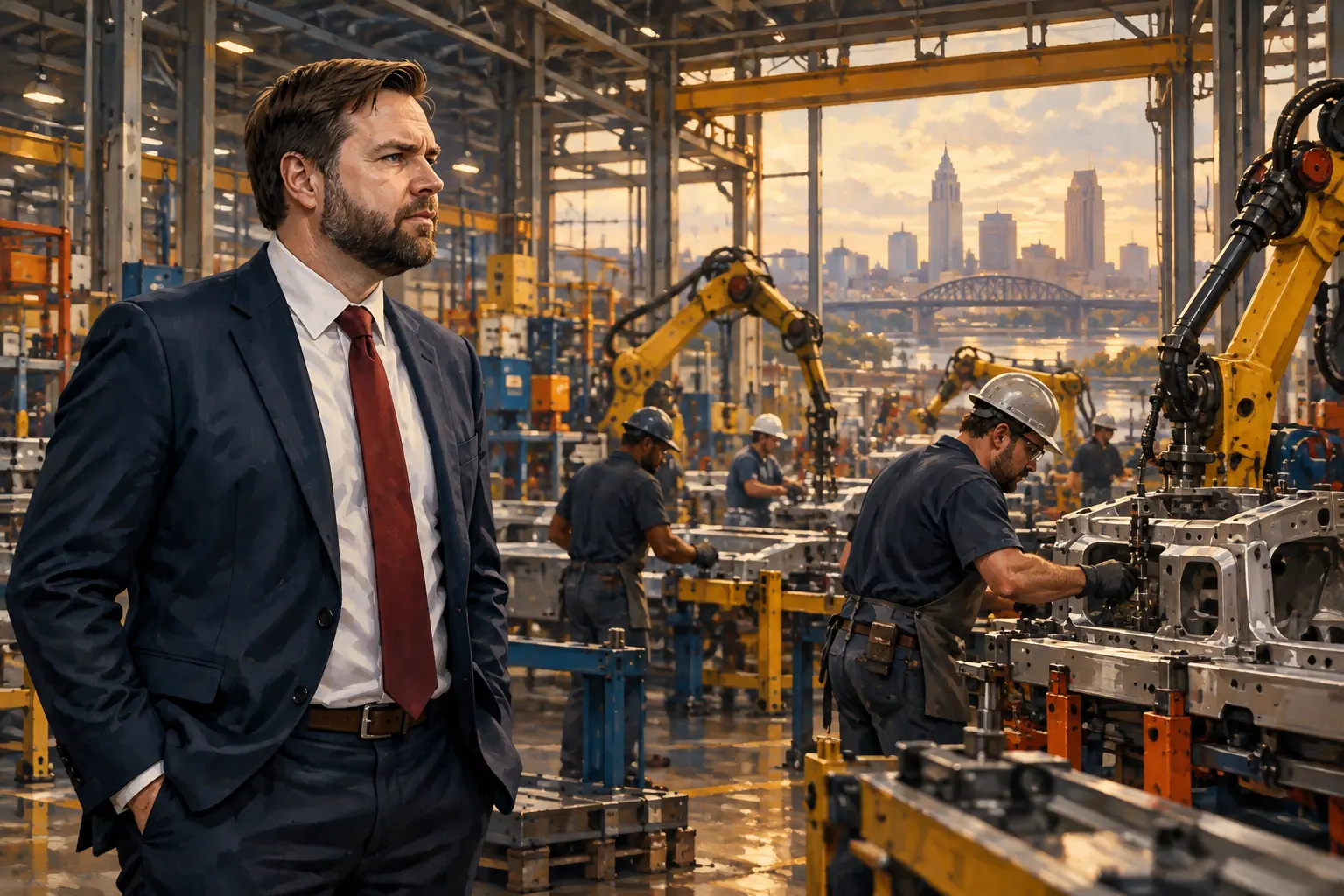
AI-assisted editorial illustration of JD Vance observing manufacturing jobs and robotics inside a modern Ohio factory.
DISCUSSION OPENRead the source brief, then add your evidence and argument.
JD Vance returned to Ohio on October 9 with a familiar promise: reward companies that build in the United States and penalize those that move production abroad. The setting, an airport rally in Lima, made the argument concrete. Northwest Ohio is tied to machinery, automotive supply chains and defense production, and Vance was campaigning for Republicans who will be judged partly on whether that industrial message feels real to workers.
The measurable claim came midway through his remarks. According to the full Roll Call Factba.se transcript, Vance said the country had created 72,000 manufacturing jobs in 2026. He paired that number with a policy formula: tax relief for domestic production and tariffs for companies that send jobs overseas. He also cited announced Ohio investments in vehicle, aerospace and pharmaceutical manufacturing.
That 72,000 figure is supported by the latest federal release, but it needs its full context. The Bureau of Labor Statistics reported on October 2 that manufacturing employment rose by 9,000 in September and was 72,000 above a recent low in December 2025. The same report said total payroll growth was only 29,000 in September, called manufacturing employment “little changed” for the month, and revised July and August payroll gains down by a combined 60,000.
So the narrow claim is grounded in a real government series. The larger conclusion—that an enduring factory renaissance has arrived—is not yet settled by that one comparison.
What the White House added on October 10
The morning after the Lima rally, the White House published a Council of Economic Advisers overview of American manufacturing. It argued that reshoring, factory construction, energy production and steel investment show a broad industrial revival. The report linked that progress to tariffs and other pro-investment policies.
This sequence matters. Vance’s rally language and the White House paper are not separate messages; they are parts of a coordinated governing and electoral case. Vance supplies the biography and the local stakes. The administration supplies the national frame and the official evidence. Together they ask voters to see short-term job gains and investment announcements as proof that policy direction has changed.
That case deserves to be evaluated on the strongest available numbers, not dismissed because it is political. Manufacturing did add jobs from the December low. September gains included plastics, rubber products and machinery. A company building a plant or expanding a line can create construction work now and production jobs later. Supporters are therefore reasonable to argue that factory policy should be judged over several years, not one quarter.
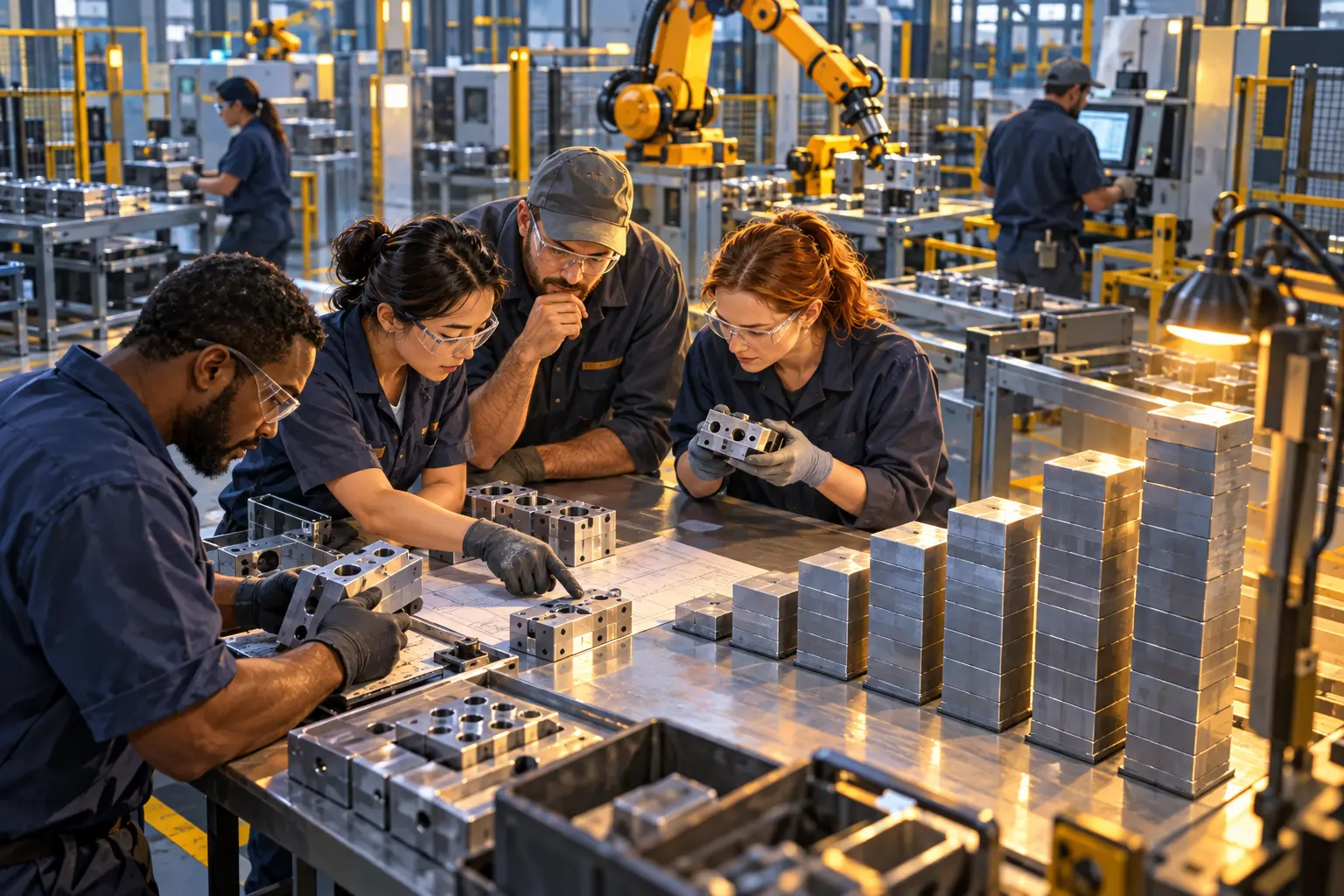
Conceptual AI-assisted illustration of workers, automation and the manufacturing employment data behind the policy debate.AI-assisted editorial illustration.
But the same data impose limits. A rise from a recent low is not the same as a new historic peak. Investment announcements are not payrolls, and factory construction is not automatically permanent manufacturing employment. Automation can raise output without restoring the large headcounts that older industrial communities remember.
For readers following the vice president’s broader record, our JD Vance background page and continuing news coverage provide context beyond a single campaign stop.
The strongest counterevidence
Two independent reports published around the same period show why Vance’s argument remains contested.
Reuters reported on October 5 that total U.S. manufacturing employment, about 12.6 million, remained roughly 21,000 below its January 2025 level even after recent growth. Reuters also described a broader labor market with low unemployment but weak hiring, modest real-income gains and less worker mobility. That does not erase the 72,000-job rise from December; it changes the baseline. Both statements can be true because they compare different dates.
The Associated Press reported on October 11 on factory workers and firms in battleground states that blame tariffs for higher input costs, layoffs or closures. AP also noted that the sector has added jobs this year while still employing fewer people than when the administration began in January 2025. The report included the White House response that current factory-construction work could produce later manufacturing employment.
That is the core dispute in a usable form. The administration points to direction, investment and a rebound from a trough. Critics point to the longer baseline, closures and the cost of imported components. Neither side can responsibly reduce the story to one number.
Why Ohio is the right test
Ohio gives Vance a particularly demanding audience because his manufacturing message is personal and local. In Lima he again connected industrial policy to the steel work performed by the grandfather who raised him. Spectrum News reported on October 10 that the rally focused on manufacturing, immigration, taxes and Republican control, while Democrats gathering nearby emphasized fuel, grocery and farm costs.
Those competing themes show what voters are actually weighing. A new plant matters, but so do electricity bills, diesel costs, grocery prices and whether a promised facility is hiring at family-supporting wages. An administration can improve industrial capacity while still losing the argument if households do not experience the gains.
Ohio also prevents the debate from becoming abstract. Vance named specific projects and specific Republican candidates. That creates verifiable milestones: construction schedules, capital actually spent, jobs opened, wages offered and suppliers added. It also creates political accountability. If projects stall, if subsidies produce few permanent positions, or if tariffs overwhelm smaller manufacturers, voters have local evidence with which to judge the promise.
Conceptual AI-assisted illustration of the time gap between factory closures, new investment and permanent hiring.AI-assisted editorial illustration.
Fact, inference and campaign rhetoric
Verified facts
Vance spoke in Lima on October 9 and made manufacturing central to his case for Ohio Republicans.
BLS says manufacturing employment increased by 72,000 from its December 2025 low through September 2026, including 9,000 jobs in September.
BLS also reported only 29,000 total payroll jobs in September and downward revisions totaling 60,000 for July and August.
The White House published a manufacturing report on October 10 arguing that tariffs, reshoring and investment are producing a revival.
Reuters and AP report that manufacturing employment remains below the January 2025 level and that some firms and workers face tariff-related costs.
Analysis
Vance has chosen a defensible but politically favorable starting point. December 2025 was a recent low, so measuring from that month captures the rebound. Opponents prefer January 2025 because it tests the full second-term record. The fairest assessment keeps both baselines visible.
There is also a timing problem. Factories take years to finance, permit, build and staff. That means the administration may be correct that current construction will create later jobs. It also means voters should not be asked to count every announced dollar as a completed success today. Capital commitments should be separated into announced, under construction, operating and hiring.
For supporters, the encouraging evidence is that manufacturing employment has moved upward in 2026 and that machinery hiring contributed in September. For skeptical readers, the warning is that the national total has not yet cleared the administration’s starting point and that broad tariffs can harm firms dependent on imported inputs. A serious pro-worker policy must answer both realities.
What evidence to watch next
The next decisive federal checkpoint is the October employment report, scheduled by BLS for November 6. One month will not settle the issue, but continued gains would strengthen Vance’s claim that the rebound is becoming a trend. A reversal would make the December-low comparison look less persuasive.
Beyond the headline job count, five measures deserve attention:
1. Whether manufacturing payrolls rise above January 2025 and remain there.
2. Whether average factory hours and overtime increase, signaling real demand rather than only announced investment.
3. Whether the Ohio projects Vance named move from construction to hiring, with published job totals and wage ranges.
4. Whether small and midsize manufacturers report relief or continued tariff-driven input pressure.
5. Whether inflation-adjusted pay and household costs improve in the communities being promised an industrial comeback.
Those tests are more demanding than applause at a rally, but they are also fairer to the policy. Vance’s 72,000 figure is not invented. It is a real rebound from a real low. The open question is whether that rebound becomes broad, durable and visible enough to change workers’ lives before voters render their judgment.
Readers can compare future evidence in our topic archive and review how we handle claims and corrections in the editorial policy.
*Vance Force is an independent, unofficial fan community. This article distinguishes verified reporting from editorial analysis and is not affiliated with JD Vance, his office, any campaign, or the U.S. government. The accompanying images are AI-assisted editorial illustrations, not documentary photographs.*