JD Vance's Lima Return Meets an Ohio Electorate Already Voting
Vance's planned October 9 visit comes after Ohio's early voting opens. The test for economic claims is not the size of the stage but the evidence behind promises about jobs and affordability.
By Vance Force Editorial Desk
AI-assisted editorial illustration of JD Vance against an autumn Ohio-inspired airport and industrial landscape; not a photograph of the planned Lima rally · AI-assisted editorial illustration, not a documentary photograph.
DISCUSSION OPENRead the source brief, then add your evidence and argument.
October 7 afternoon analysis — prepared from reporting and official information available by the evening of October 6 in the United States. “Afternoon” identifies this edition; it does not imply the October 9 event has already occurred.
JD Vance's planned return to Lima arrives at a consequential point in Ohio's election calendar: voting is already underway. The vice president is listed as a special guest at an October 9 Republican midterm event, while the Ohio secretary of state's office says early in-person and absentee voting began October 6.
That sequence changes how to read the visit. It is an appearance during an active election, not simply a distant preview of November. But it does not tell us how people are voting, whether the event will change preferences, or which side will benefit. Those are outcomes to be established, not conclusions to extract from a campaign schedule.
The strongest way to assess the appearance is to keep three records separate: what organizers have announced, what candidates actually say when the event occurs, and what independent evidence can establish about the claims. This analysis concerns that distinction, not a prediction of a rally that has yet to happen.
First, distinguish the event schedule from the speech
Local broadcaster WLIO reported on October 6 that the event would take place at Allen County Regional Airport. Its report listed doors opening at 11 a.m., an event start at 12:15 p.m., and Vance expected shortly after 1:30 p.m., all Eastern time, on Friday, October 9.
The organizer's event listing identifies Vance as a special guest and gives a 12:15 p.m. event time. That should not be presented as a guaranteed time for his remarks. Schedules can change, and the event has not yet supplied a speech, an attendance count or an account of audience reaction.
This is a small editorial distinction with a larger purpose. Precise reporting should not turn an invitation into a completed event or a running order into a promise. We will evaluate the actual remarks against the announced context once a reliable record exists.
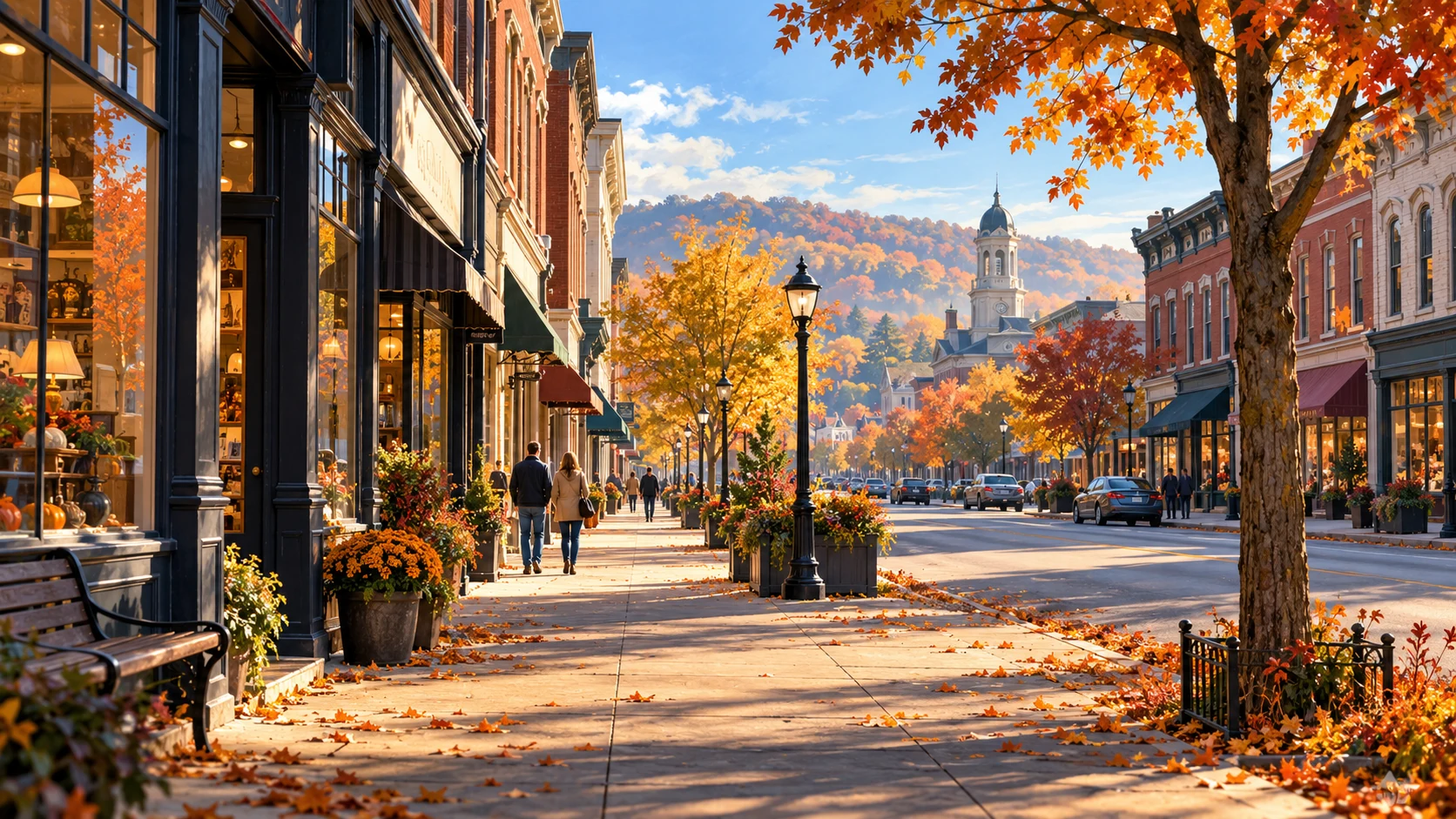
An Ohio-inspired community scene, not a photograph of a named town or actual event. AI-assisted editorial illustration.AI-assisted editorial illustration.
The analytical consequence is that campaign appearances and ballot casting now overlap. Some voters may cast ballots before a later speech, while others may do so afterward. That timing alone does not establish the political effect of either choice. Nor can a count of ballots requested or returned be treated as a tally of candidate support.
Election administration data and opinion research answer different questions. A participation dashboard can describe recorded activity. A poll estimates preferences within a defined sample and methodology. Certified results ultimately establish the count. Treating those sources as interchangeable can produce confident but unsupported claims about momentum.
For the same reason, early lines at a polling location or images of a crowded rally deserve context. They can document the people and place shown. They cannot, without additional evidence, establish a statewide trend or the reasons behind it.
The Senate contest adds stakes, not certainty
Spectrum News' October 6 reporting placed Vance's visit within a series of high-profile appearances in Ohio. It identified the Senate contest between incumbent Jon Husted and former senator Sherrod Brown as a central backdrop, and reported that Husted planned to attend the Vance event.
The report also presented contrasting interpretations of the visits. A Republican representative emphasized enthusiasm, while an academic observer discussed turnout and the importance of independent voters. Those accounts are explanations offered by sources—not independent proof of why every appearance was scheduled or what effect it will have.
A careful reading therefore avoids two shortcuts: assuming a visit proves electoral weakness, or assuming prominent visitors guarantee strength. Both claims can be made about the same itinerary. Neither becomes established merely through repetition. The useful evidence lies in what is said, how specific the commitments are, and how later facts compare.
Jobs claims need a defined unit of measurement
Manufacturing is a natural subject for an Ohio economic discussion, but the word “jobs” can hide several different measures. An announced project, a construction phase, a vacancy, a payroll position and sustained employment are not equivalent. A credible claim should identify which measure it uses and the period it covers.
The Bureau of Labor Statistics' state and area employment overview explains that its establishment survey measures payroll employment, hours and earnings. The employment figures refer to jobs at workplaces rather than a count of unique employed residents; a person on more than one payroll can be counted more than once. Estimates are subject to revision and annual benchmarking.
Those methodological details matter when a political argument compares unlike figures. A project announcement cannot be inserted into a historical payroll series as though the promised positions already exist. A national trend also cannot automatically establish the experience of one community. Our earlier manufacturing jobs report provides related context.
Illustrative manufacturing scene, not evidence of a particular factory, investment or newly created job. AI-assisted editorial illustration.AI-assisted editorial illustration.
Affordability is a set of questions, not a single slogan
Our assessment is that an economic claim becomes more useful when it specifies a household cost, a policy mechanism and a timeframe. Saying that living costs should fall expresses a goal. Explaining what will change, who will administer it and when the effect can reasonably be measured creates something readers can later check.
This is also where a local example needs careful handling. One family's bill can illustrate an experience; it does not establish an average for all Ohio households. A percentage change needs a starting date and a clear definition of the item measured. An annual average may describe a different period from the price visible on the day of a speech.
The same standard applies across candidates and parties. A fair comparison does not select the most flattering time window for one claim and the harshest window for another. It uses compatible dates, categories and sources, while noting where the information remains incomplete.
The useful record begins after the rhetoric
When the event occurs, the first task will be to distinguish a new policy commitment from a repetition of an existing position. A new commitment should be recorded with its proposed scope, responsible institution and any stated timing. If those details are absent, that absence should remain visible rather than being filled in by interpretation.
The next task is continuity. A promise about a project can be checked against later milestones. A claim about household costs can be compared with the relevant data series. A claim about public support requires appropriately designed evidence. The point is not to demand instant results, but to preserve a record against which results can eventually be judged.
Vance's planned Lima appearance is therefore worth following for its substance as well as its electoral setting. Ohio's voting calendar supplies the immediate context. The quality of the eventual economic argument will depend on whether its claims are specific enough to test—and whether coverage holds them to a consistent standard afterward.
Vance Force is an independent fan community, not an official government or campaign publication. This is analysis, not an endorsement of a voting choice or a forecast of election results. All three images are AI-assisted editorial illustrations. See our editorial policy for sourcing and corrections.
JD Vance's Lima Visit and Ohio's Early-Voting Test