
Vance separates the sentence from the broadcast
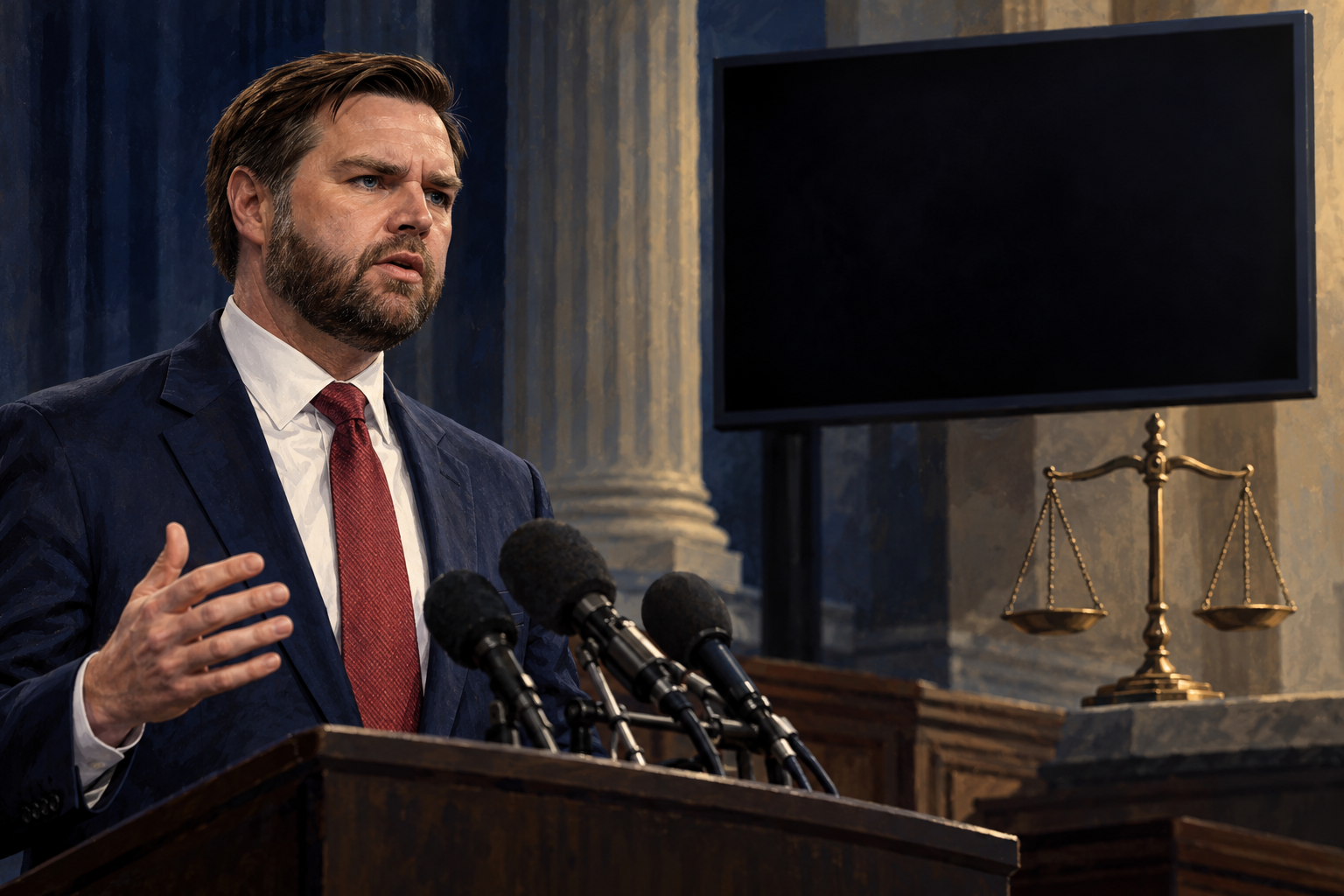
Vice President JD Vance stepped into an unusual military-justice controversy on Friday, October 9, by questioning whether the Pentagon will actually livestream the scheduled execution of Nidal Hasan and saying he would not watch if it does. His remarks did not challenge Hasan’s conviction or death sentence. They did, however, put distance between the vice president and the idea of making an execution broadly available as a public broadcast.
That distinction is the center of the story. The government can argue that a lawful sentence should be carried out after appellate review. A separate decision is required to transform that act into a mass-media event. Vance’s comments suggest that at least one senior administration official sees uncertainty around the second choice, even while affirming the gravity of Hasan’s crimes.
Reuters reported that Vance told reporters in Cincinnati he did not know whether the livestream would actually happen and that he would not watch it. He also urged the public not to lose sight of the 13 people Hasan was convicted of killing at Fort Hood in 2009.
The verified facts are narrower than some of the political reaction. An execution date and method have been formally announced. A livestream has been announced by defense officials and reported by major news organizations. Vance expressed doubt, but he did not announce a reversal. President Donald Trump has publicly supported the execution by firing squad, while his final position on public broadcasting was not settled in the reporting available Friday afternoon.
What has been formally established
The U.S. Army’s October 7 notice states that the acting Army secretary directed Hasan’s execution by firing squad at Fort Hood on December 3, 2026. It says Trump approved the death sentence on October 2 after the military appellate process upheld the conviction and sentence, and notes that the Supreme Court declined review in March 2025. The notice also identifies Army Regulation 190-55 as the governing military procedure.
The Army statement is an official source for the date, place, method and procedural history. It does not describe a public livestream. That proposal emerged separately. The Associated Press reported that the Pentagon said the execution would be livestreamed after Defense Secretary Pete Hegseth described it as public and available to watch. Reuters later reported that the Pentagon had not yet explained practical details, including how an audience would be selected, whether victims’ families would attend, or what precise protocol would govern the broadcast.
That gap matters. A public statement of intent is not the same as a completed legal and operational directive. Vance’s doubt may reflect internal disagreement, uncertainty over military regulations, concern about the treatment of victims’ families, or simple caution while the Pentagon writes its procedures. The public record does not yet establish which explanation is correct.
Why Vance’s answer matters

Vance could have simply endorsed the livestream, or he could have demanded that it be canceled. He did neither. According to CBS News, a reporter asked how the broadcast proposal fit with Vance’s Catholic faith. Vance responded by doubting that the livestream would occur, emphasizing the severity of Hasan’s crimes and saying he would not watch.
Politically, that answer protects two positions at once. It keeps Vance aligned with an administration that supports Hasan’s execution, while signaling discomfort with treating the punishment as content for a broad audience. That is not necessarily evasion. It may represent a real moral distinction: the state’s authority to impose punishment does not automatically create a public entitlement to consume another person’s death as a spectacle.
Supporters of Vance can reasonably view the answer as disciplined. It centers the victims and avoids confusing opposition to a broadcast with sympathy for a convicted mass murderer. Skeptical readers can also reasonably ask whether private discomfort is enough. Vance is the vice president. If he believes a livestream is wrong or dangerous, the meaningful test is whether he presses for a clear policy before December rather than merely declining to watch.
The issue also tests Vance’s broader public style. He often argues that institutions must be accountable to ordinary citizens. Transparency is therefore a serious counterargument. One capital-punishment scholar quoted by the Associated Press said public viewing could expose what an execution actually entails instead of allowing the government to hide behind secrecy. If the state exercises its most irreversible power, citizens have an interest in knowing how it does so.
But transparency does not require unrestricted distribution. Courts can permit witnesses, independent reporters, legal observers and victims’ representatives while prohibiting recording and rebroadcast. Written reports, verified transcripts and inspector oversight can document compliance without turning the event into shareable footage. The policy question is not secrecy versus total exposure; it is which form of observation creates accountability without creating entertainment.
The risks of turning punishment into media
The strongest argument against a livestream is not only moral. It is operational. Reuters reported warnings that extremist groups could edit and circulate the footage as recruitment material. A broadcast intended to demonstrate deterrence could instead elevate the condemned man’s profile and provide propaganda to movements hostile to the United States.
There is also a victim-centered concern. Families of people killed or wounded at Fort Hood do not all have to share one view of capital punishment or public access. A government that claims to act in their name should consult them without pressuring them to support a spectacle. Their loss should not become a stage prop for either side of a political debate.
History supplies another warning. The AP’s review of public executions found that American jurisdictions moved away from the practice as crowds, celebration and botched procedures undermined the intended solemnity. The closest modern comparison was the 2001 execution of Timothy McVeigh, which victims’ families could view by closed-circuit television. That was controlled access for people directly affected, not a global stream available for clipping, reposting and algorithmic promotion.
Digital distribution makes the consequences harder to contain. A livestream is not merely live. It can be recorded, mirrored, monetized, manipulated and repeatedly shown outside the government’s original context. Once released, no Pentagon policy could reliably recover it. That irreversibility should raise the standard for authorization.

Readers following Vance’s official role can compare this analysis with the broader reporting in the /news archive and his public record summarized on /about-jd. Our /editorial-policy explains why this article distinguishes confirmed decisions from proposals and editorial judgment.
What a responsible policy would require
Before any broadcast decision, the administration should publish a written directive identifying its legal authority, purpose, audience, safeguards and review process. It should explain whether the stream would be open to everyone or limited to credentialed observers and affected families. It should disclose who may record it, whether platforms may redistribute it, and how the government would respond to altered or propagandistic copies.
The Pentagon should also explain how it consulted victims’ families, military lawyers, medical personnel, counterterrorism officials and religious advisers. Those perspectives do not dictate the outcome, but excluding them would make the process look designed for political effect rather than military justice. Independent observers should be able to verify that the execution follows governing law and regulation.
Vance’s role is now important because his public doubt creates an expectation of follow-through. If the livestream is canceled, the administration should say who made that decision and why. If it proceeds, Vance should explain whether his concerns were addressed. Silence would leave his Friday comments as a personal preference rather than a governing position.
Evidence to watch next
The decisive evidence will be documentary, not rhetorical: a Pentagon or Army broadcast directive; any revision to the announced plan; the position of the White House; consultation with victims’ families; legal challenges; and the final access rules. It will also matter whether officials describe a livestream as transparency, deterrence or punishment, because those goals require different safeguards and can produce different harms.
Vance was right to separate Hasan’s crimes from the controversy over broadcasting the execution. Remembering the victims does not require turning death into public content. The next test is whether the vice president converts that distinction into a clear, accountable policy before the government reaches an irreversible moment.
Sources
- U.S. Army Public Affairs: Army Sets Execution Date for Convicted Murderer Nidal Hasan — October 7, 2026.
- Reuters: Vance says he does not know if Pentagon will proceed with livestream — October 9, 2026.
- CBS News: Vance says he would not watch execution livestream — October 9, 2026.
- Associated Press: Pentagon says execution will be livestreamed — October 8, 2026.
- Associated Press: The history and policy questions around public executions — October 9, 2026.
*Vance Force is an independent fan community. It is not affiliated with, authorized by, or endorsed by JD Vance, his office, any campaign, the White House, the Department of Defense, or any government entity. This article separates verified reporting from editorial analysis and links readers to the underlying sources.*